Eyelid Surgery, Eyelid Lifts (Blepharoplasty)

Are you considering eyelid surgery in Vancouver? Eyelid surgery, or blepharoplasty, is a cosmetic procedure that is performed to improve the appearance of the eyelids.

It can be done on both the upper and lower lids, and is used to remove excess skin and fatty deposits that may cause sagging of the upper eyelid or bags under the eyes. It can also be used to correct drooping eyelids by removing wrinkles or creases in this area.

A blepharoplasty procedure in Vancouver typically takes two to three hours to complete, depending on how much work needs to be done. During the operation, an incision will be made either above the natural line of the upper lid or below the lashes of the lower lid. The surgeon then removes any excess fat and skin before suturing up the wound.

Most people who undergo an eyelid lift procedure report feeling more confident about their appearance after recovery has been completed. Recovery time varies from person to person but typically takes up to two weeks for patients undergoing blepharoplasty surgery.

In order for optimal results it’s important that you follow all instructions given by your doctor closely before and after your surgery.
Rejuvenate your eyes with expert Eyelid Surgery (Blepharoplasty) in Vancouver. Dr. Anzarut specializes in removing excess skin and fat bags from the upper and lower eyelids, correcting hooding and restoring a rested, youthful appearance. Serving Vancouver, Burnaby, Coquitlam, Richmond, Surrey, Victoria, and Nanaimo. Book your consultation today.

Am I a Candidate For Eyelid Surgery?

If you feel your eyelids are heavy or leave you with tired appearance you may be a good candidate for a blepharoplasty procedure. A consultation with Dr. Anzarut may be the best way to know. Dr. Anzarut will discusses what to expect before, during, and after the surgery.

Your safety is Dr. Anzarut’s primary concern. If you are in good physical health and do not have any medical conditions that would complicate recovery or increase the risk of surgery, you may be a candidate for eyelid surgery. Bleeding disorders, problems with dry eyes, uncontrolled hypertension, or LASIX surgery in the past 6 months may exclude you from having blepharoplasty.

In some patients drooping upper eyelids may be caused by loose skin on the forehead (brow ptosis) or stretched eyelid muscles (upper eyelid ptosis). This will be assessed during the consultation process. Dr. Anzarut can treat these conditions with either a brow ptosis or an eyelid ptosis procedure, if needed.

Contact Dr. Anzarut if you have any questions regarding your suitability and goals for eyelid surgery. During your consultation, Dr. Anzarut will discuss your options and recommend a course of treatment. Dr. Anzarut is also able to perform remote consultations.

Benefits of Eyelid Surgery

Eyelid surgery, or blepharoplasty, is a popular procedure for people in Vancouver who want to improve the appearance of their eyes. By removing excess skin, fat and muscle around the eyes, eyelid surgery can lead to a more alert and youthful look.

The benefits of eyelid surgery extend beyond just aesthetics; it can also reduce vision problems caused by drooping upper eyelids and puffy bags below the eyes. The procedure is usually done on an outpatient basis, which means it typically requires only local anesthesia.

It’s also a relatively quick process with minimal downtime after the operation. Patients should expect some bruising and swelling in the treated area that should subside within two weeks. Other potential side effects are minimal compared to other types of cosmetic surgery, so recovery time is often shorter than other procedures.

By taking advantage of these benefits, patients can enjoy improved vision along with a more rested and youthful appearance. Eyelid surgery can help people look their best while eliminating any vision problems that may have been caused by excess skin or puffiness around the eyes.

With proper care before and after surgery, patients can be sure they will get the best possible results from their procedure.

How Does Eyelid Surgery Rejuvenate the Appearance Around Your Eyes?

The first signs of aging occur around the eyes. This is also the first place people look when talking to someone. Gravity and age cause the eyelid skin to droop, hood, and wrinkle. The smooth upper eyelid skin begins to disappear. Fat around the eyelids also changes. Excess fat can herniate forward from behind the eyes giving the appearance of bags. In others, the fat may shrink with age giving a hollowed appearance.

The position and health of the upper cheek will greatly influence the appearance of the lower eyelids. With age, upper cheek skin and fat begin to shrink and drop. Dark circles may develop under the lower eyelids as the cheek starts to drop with gravity. The result is a tiered and old appearance.

With eyelid surgery, known as blepharoplasty surgery, Dr. Anzarut can improve the appearance of drooping eyelids, bags around the eyes, and loss of fat. Related procedures can address the circles and drooping of the cheek. This leads to a more rested and youthful look.

Dr Anzarut offers eyelid surgery for BC residents, including Vancouver, Burnaby, Coquitlam, Richmond, Surrey, Victoria, and Nanaimo.
Dr Anzarut Plastic Surgery offers eyelid surgery for BC residents, including Vancouver, Burnaby, Coquitlam, Richmond, Surrey, Victoria, and Nanaimo.

Eyelid Surgery Procedure

Upper eyelid surgery (Upper eyelid blepharoplasty)

Dr. Anzarut will use a marking pen and calipers to mark the incisions and areas of fat excess or fat loss. Local anesthesia, freezing, is applied. Medicated eye drops are provided to reduce post-operative swelling. Some patients prefer an oral medication to help them relax during the procedure. If you think you may prefer this, let Dr. Anzarut know. To ensure the freezing has had its maximal effect your procedure will begin approximately 25 minutes after freezing.

Dr. Anzarut performs his skin incision at the level of the skin fold of the eyelids. This is usually 8 to 10 mm above the eyelashes. Excess skin, muscle and fat are removed as needed. In some patients fat is add to an area of fat loss and hollowing. If the eyelid muscles require repair, ptosis surgery, this completed. The skin incision is then stitched closed with non-dissolving sutures. Dr. Anzarut avoids dissolving on the skin because they create more scarring. The procedure takes 15 to 30 minutes and should be pain free.

Lower eyelid surgery (Lower eyelid blepharoplasty)

Similar to upper eyelid surgery, Dr. Anzarut will use a marking pen and calipers to mark the incisions, areas of fat excess, and areas of fat loss. Local anesthesia, freezing, is applied. Medicated eye drops are provided to reduce post-operative swelling. If you prefer, the procedure can also be performed with sedation or with general anesthesia (asleep). To ensure the freezing has had its maximal effect your procedure will begin 20 minutes after freezing.

If the addition of fat is required to treat hollowing, this is done first. Next, an incision is made on the inside of the eyelid or on the outside of the eyelid just below the eyelashes. Excess fat under the eyes is either removed or repositioned. If necessary, excess skin is removed and the upper check is lifted (midface lift). A stitch is placed to support the eyelid in order to avoid lower eyelid drooping. This is called a canthopexy. In some cases Dr. Anzarut will place a temporary suture between upper and lower eyelids. This is called a Frost stich. A lower lid blepharoplasty procedure takes one to two hours depending on the complexity of the individual case.

Recovery After Eyelid Surgery

The key to a fast and painless recovery is to minimize swelling and bruising. Dr. Anzarut takes special measures to shorten your recovery after your eyelid surgery procedure. If you have fat (fat grafting) added you will have significantly more swelling and bruising. It is important to follow the pre and post-procedure instructions.

2 Weeks Before Surgery

Before blepharoplasty surgery you will be provided with a list of foods and medications to avoid (LINK). On the day of the procedure ensure you fill your prescriptions and bring them to the office with you. You may also benefit from ensuring you have ice packs ready for your journey home and the following 48 hours. You should have a pair of comfortable sunglasses to use during the week after the procedure. You should arrange a recliner or multiple pillows to allow you to sleep with your head up for the first two nights after surgery. Finally, you will need to arrange a ride to bring you home after the procedure.

The Day of Your Procedure

At the time of the procedure, medications are used to reduce bruising and swelling. After surgery it is very important to ice the area. Icing is done 15 minutes on and 15 minutes off for the first 48 hours, while awake. Ice is applied indirectly with a cloth placed between the ice and the skin. Your head is kept elevated for the next 48 hours to help reduce swelling. This means you will benefit by sleeping with your head up. This can be done by sleeping in a lazy boy chair or with multiple pillows. Avoid any heavy lifting or straining for the first 3 weeks after surgery. This may increase the risk of bleeding.

The First Week After Surgery

The first week after surgery your eyelids may not close as tightly. To avoid problems with dry eyes Dr. Anzarut will advise you on the use of medications to keep the eyes clean and lubricated. You will use an ointment at night and liquid drops during the day. Your stiches are removed by Dr. Anzarut 5 to 7 days after surgery.

After The First Week

After the first week the swelling and bruising will have subsided. You can start to use makeup. At this point you can slowly resume normal activities. Heavy lifting or straining should still be avoided for 3 weeks. You can shower, however you should avoid swimming for 3 weeks.

Talk to Dr. Anzarut if you have any questions or concerns about the recovery period.

Eyelid Surgery Results

It may take several months for the final results to appear. With an upper eyelid blepharoplasty, most of the swelling and bruising is gone by the second week.

With lower eyelid blepharoplasty, the recovery period is more variable. It depends on the complexity of the procedure required. The results of eyelid surgery last a long time, however the aging process does continue.

It is important to take care of the area as it heals and sun protection will help maintain your results. Note that it may not always be possible to obtain optimal results with one procedure, and another operation may be required in a few cases. This is more common in patients requiring the addition or fat (fat grafting).

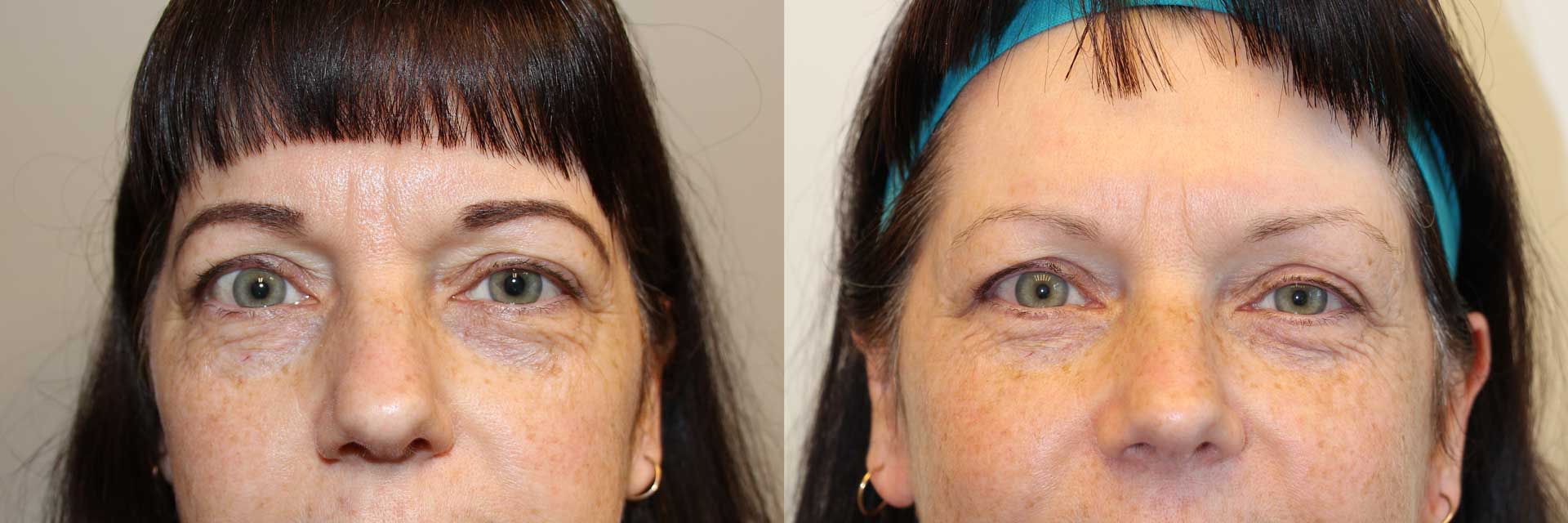
Eyelid Surgery Before and After Photos
blepharoplasty 15856 before after 01
Eyelid Surgery (Blepharoplasty) Before & After Case 15856

See Eyelid Surgery “Before and After” Photos

Eyelid Surgery Risks and Complications

Blepharoplasty, like all surgery, carries some risk. Complications are not common and usually minor when surgery is performed by a certified plastic surgeon (LINK).

Don’t be afraid to ask Dr. Anzarut any questions you may have about the procedure or recovery process.

Some of the possible side effects of Eyelid Surgery include temporary dry eyes, temporary difficulty closing the eyes, temporary sensitivity to bright light. Rarely patients can develop a cyst along the incision line. This can easily be removed under local anesthesia. Infection is very rare.

Lower eyelid surgery carries the additional risk of lower eyelid droop (ectropion). During lower eyelid surgery Dr. Anzarut places a special stitch (canthopexy) to avoid this problem.

Dr. Anzarut has published his research on the importance of this stitch in cosmetic lower eyelid blepharoplasty. It was published in the most highly regarded plastic surgery journal (the Journal of Plastic and Reconstructive Surgery). This work is one of the most highly quoted research papers on the topic of lower eyelid blepharoplasty.

You can reduce the risks of complications by ensuring your surgeon is a certified plastic surgeon and by following your surgeon’s instructions closely after surgery.

Cost of Eyelid Surgery

The cost of eyelid surgery in Vancouver can vary greatly depending on the type and extent of the procedure. It is important to discuss pricing details with a board certified cosmetic surgeon prior to scheduling any treatment.

The cost of any procedure may include surgeon fees, facility costs, anesthesia costs, medications, and fees for medical tests. Purely cosmetic surgery is not usually covered by the medical services plan.

Patients should also factor in any additional expenses such as travel costs and lodging if they are travelling from out of town for their procedure. It is recommended to speak with Dr Anzarut about payment plans and insurance coverage options that may help cover some or all of these related expenses.

Cost of Upper Eyelid Surgery (Upper Blepharoplasty)

If the excess skin and hooding of the upper eyelids is so severe that it blocks your peripheral vision the costs of surgery may be covered by the medical services plan (MSP). If damage or weakness of the eyelid muscles is the cause of your eyelid drooping (ptosis), the costs of surgery may be covered by the medical services plan (MSP).

If you decide to pay privately for upper eyelid blepharoplasty the cost may be between $2,000 to 3,000.

Cost of Lower Eyelid Surgery (Lower Blepharoplasty)

If the drooping of the lower lid leads to significant deformed or the tearing function of the eyes is impaired, the costs of surgery may be covered by the medical services plan (MSP).

If you decide to pay privately for lower eyelid blepharoplasty the cost ranges from $2,500 to $4,000.

Non-Surgical Alternatives To Blepharoplasty

For those considering eyelid surgery in Vancouver, there are several non-surgical alternatives that can be explored.

One of the most popular is the use of injectables and fillers, such as Botox or Dysport, to reduce wrinkles and sagging skin around the eyes. These temporary treatments can provide an improvement in appearance that lasts for up to four months.

Another option is laser resurfacing, which uses a light-based technology to improve skin texture and reduce wrinkles and other signs of aging around the eye area.

Finally, chemical peels can help to reduce fine lines and give skin a smoother and more even appearance. Chemical peels also help to reduce the appearance of dark circles under the eyes.

All of these treatments are safe and effective at improving the look of eyelids without surgery.

Frequently Asked Questions (FAQ)

1. What is Eyelid Surgery (Blepharoplasty)?

Eyelid surgery, clinically known as blepharoplasty, is a precise facial plastic surgery designed to remove excess skin, muscle, and protruding orbital fat pads from the upper and lower eyelids. This procedure addresses dermatochalasis (sagging eyelid skin) and under-eye bags, restoring a rested, youthful appearance. In Vancouver, it is frequently performed as a standalone procedure or combined with a Facelift (Rhytidectomy) to ensure comprehensive, harmonious facial rejuvenation.

2. How much does a Blepharoplasty cost in Vancouver, BC?

In Vancouver, an upper blepharoplasty typically ranges from $4,000 to $6,500 CAD, while a lower blepharoplasty ranges from $5,500 to $8,500 CAD. Combining both upper and lower lids generally costs between $8,000 and $12,000 CAD. Your customized quote encompasses the FRCSC surgeon’s fee, the FRCPC anesthesiologist (if IV sedation is required), and operating room costs at an NHMSFAP-accredited private facility in the Lower Mainland.

3. Does the BC Medical Services Plan (MSP) cover Blepharoplasty?

The Medical Services Plan (MSP) of BC only covers upper blepharoplasty if it is deemed a strict medical necessity—specifically, if severe ptosis or drooping skin significantly obstructs your peripheral visual field. This requires documented visual field testing by an optometrist or ophthalmologist. Lower eyelid surgery for cosmetic under-eye bags is purely elective and never covered by MSP. For private-pay patients, we accept medical financing through Beautifi and Medicard.

4. What is the difference between Upper and Lower Blepharoplasty?

An upper blepharoplasty involves an incision hidden in the natural eyelid crease to excise redundant, hooding skin and small fat deposits, directly addressing heavy, tired-looking eyes. A lower blepharoplasty specifically targets under-eye puffiness and deep tear troughs. It involves removing or repositioning prolapsed orbital fat and tightening the lower lid skin, either through a subciliary (lash-line) or transconjunctival (inside the lid) surgical approach.

5. What is a Transconjunctival Blepharoplasty?

A transconjunctival blepharoplasty is an advanced lower eyelid technique where the incision is made completely inside the lower eyelid, leaving zero visible external scarring. This approach is ideal for younger Vancouver patients who possess excellent skin elasticity but suffer from genetic under-eye fat herniation (bags). Because no external skin is excised, the risk of ectropion (outward turning of the eyelid margin) is virtually eliminated.

6. Will I have visible scars after Eyelid Surgery?

Scars from eyelid surgery are exceptionally well-hidden. For the upper eyelids, the incision is placed precisely within the natural supratarsal crease. For the lower eyelids (using the subciliary approach), the incision is concealed just one millimeter below the lower lash line. Eyelid skin is the thinnest on the human body, meaning it heals remarkably well. Over 6 to 12 months, these incisions typically fade into imperceptible, pale lines.

7. Can Blepharoplasty fix drooping eyebrows?

No. A blepharoplasty only removes excess tissue from the eyelids themselves. If your heavy upper eyelids are actually caused by a descended, heavy forehead pushing down on the orbital rim, you require a Brow Lift (Forehead Lift). During your Vancouver consultation, your surgeon will physically elevate your brow to differentiate between true dermatochalasis (excess eyelid skin) and brow ptosis to ensure the anatomically correct surgical plan.

8. What type of anesthesia is used for Eyelid Surgery?

Upper eyelid surgery is highly tolerated and frequently performed under Local Anesthesia in our Vancouver clinic, meaning you are awake but the area is completely numb. Lower blepharoplasty, or combined four-lid surgeries, are usually performed under deep IV Sedation (Twilight Anesthesia) or General Anesthesia administered by a board-certified FRCPC anesthesiologist. This ensures absolute stillness, maximum comfort, and strict blood pressure control to minimize intraoperative bruising.

9. How long is the recovery time for a Blepharoplasty?

Most Vancouver patients plan for 7 to 10 days of social downtime. Swelling and bruising (often presenting as mild “black eyes”) peak around Day 3. You must keep your head elevated and diligently apply cold compresses. Non-dissolvable sutures are typically removed in the clinic at Day 5 to 7. By Day 10, residual bruising can usually be camouflaged with makeup, allowing a confident return to office work.

10. When can I resume exercise and outdoor activities?

Light, slow walking is encouraged immediately to prevent blood clots. However, activities that elevate your heart rate or require bending over must be avoided for 3 to 4 weeks. Prematurely running the Vancouver Seawall or performing yoga inversions can spike blood pressure and cause a hematoma (internal bleeding). You must also wear dark sunglasses outdoors to protect the healing incisions from UV damage and coastal wind irritation.

11. Will Eyelid Surgery change the shape of my eyes?

The goal of an aesthetic blepharoplasty is to restore a refreshed, youthful contour, not to alter your fundamental eye shape. However, if you have severe lower lid laxity (a weak “snap-back”), your surgeon may perform a concurrent Canthopexy or Canthoplasty (tightening the outer corner of the eye) to physically support the lower lid and prevent rounding or a “sad eye” appearance post-surgery.

12. What is Ectropion and how is it prevented?

Ectropion is a surgical complication where the lower eyelid pulls away from the eyeball, causing dryness, irritation, and a rounded appearance. This occurs if too much skin is excised during a lower blepharoplasty or if the patient has unrecognized lid laxity. FRCSC plastic surgeons meticulously evaluate your lower lid tone during consultation and utilize conservative excision techniques or canthal support to mathematically prevent this complication.

13. How do I choose the best Blepharoplasty surgeon in Vancouver?

Never compromise on ocular safety. Ensure your surgeon is a Fellow of the Royal College of Physicians and Surgeons of Canada (FRCSC). Verify their credentials with the College of Physicians and Surgeons of BC (CPSBC). Review specific before-and-after galleries focusing exclusively on the eyes. A master surgeon’s results will demonstrate crisp, natural eyelid creases, no hollowed-out lower lids, and invisible scars without any pulling of the eye shape.

14. Are the results of Eyelid Surgery permanent?

The removal of bulging fat pads (under-eye bags) is generally permanent, as those localized fat cells do not regenerate. However, your skin will continue to age and lose elasticity over time. Most Vancouver patients enjoy the rejuvenating effects of an upper blepharoplasty for 10 to 15 years before age-related skin laxity may necessitate a minor surgical touch-up. Daily use of medical-grade eye creams and SPF protects this investment.

15. Can Blepharoplasty treat dark circles under the eyes?

It depends on the root anatomical cause. If your dark circles are actual shadows cast by bulging orbital fat pads, a lower blepharoplasty will completely eliminate those shadows. However, if your dark circles are caused by thin skin revealing underlying purple venous structures or hyperpigmentation, surgery will not change the skin pigment. In these cases, we often combine surgery with non-surgical treatments like PRP (Platelet-Rich Plasma) or laser resurfacing.

16. Can I wear contact lenses after Eyelid Surgery?

You must refrain from wearing contact lenses for a strict minimum of 2 to 3 weeks post-surgery. Pulling on the upper or lower eyelids to insert or remove lenses can stretch the healing incisions and disrupt the dissolving internal sutures. Vancouver patients must rely on prescription eyeglasses during this initial healing phase. You will be explicitly cleared by your surgeon before safely resuming contact lens use.

17. Why must I stop smoking before a Blepharoplasty?

Nicotine is a potent vasoconstrictor that aggressively restricts blood flow to the delicate, millimeter-thin eyelid tissues. Continuing to smoke or vape before surgery drastically increases the risk of catastrophic complications, including tissue necrosis (skin death), severe infection, and thick, widened scars. You must be strictly nicotine-free for a minimum of 4 to 6 weeks before and after your procedure in British Columbia.

18. What is Ptosis and does Blepharoplasty fix it?

Ptosis is a medical condition where the actual upper eyelid margin droops over the pupil, typically caused by a stretched or weakened levator muscle. A standard cosmetic blepharoplasty only removes skin and fat; it does not repair this muscle. If you have true ptosis, your surgeon must perform a concurrent Levator Advancement or Ptosis Repair during the blepharoplasty to physically raise the eyelid margin and restore your visual field.

19. Can fat grafting be combined with Lower Eyelid Surgery?

Yes. Modern blepharoplasty focuses on tissue preservation rather than extreme excision. If you have deep tear troughs (hollows) beneath the orbital fat bags, aggressively removing all the fat can leave the eyes looking skeletal. An expert surgeon will often perform fat repositioning—moving the existing fat into the hollows—or utilize autologous facial fat grafting to seamlessly restore youthful midface volume, blending the lower eyelid gracefully into the cheek.

20. Where is the Blepharoplasty performed in Vancouver?

Your safety is our priority. All eyelid surgeries are performed in a fully accredited, state-of-the-art private surgical centre. Our facility holds the rigorous Non-Hospital Medical and Surgical Facilities Accreditation Program (NHMSFAP) certification mandated by the CPSBC. This ensures our operating rooms are equipped with hospital-grade sterilization technology, emergency protocols, and advanced monitoring systems, guaranteeing your facial surgery meets the absolute highest safety standards in the province.

Book a Consultation Today

Service Area Locations

Dr Anzarut Plastic Surgery in Vancouver serves Kitsilano, Burnaby, Coquitlam, New Westminster, Richmond, Surrey, Delta, North Vancouver, West Vancouver, Langley, and White Rock in Metro Vancouver (Lower Mainland), British Columbia.

Dr Anzarut Plastic Surgery in Duncan serves Victoria, Nanaimo, Courtenay, Campbell River, Parksville, Port Alberni, Ladysmith, Cowichan Valley, and Comox Valley on Vancouver Island.

Things to Consider When Choosing Eyelid Surgery in Vancouver, BC

The eyes are the focal point of human connection. Whether you are addressing heavy, vision-impairing upper lids or genetic under-eye bags, blepharoplasty requires millimeter-perfect precision. This comprehensive checklist covers every clinical, financial, and logistical detail you must know before proceeding with eyelid surgery in Vancouver, British Columbia.

I. Surgeon & Facility Vetting (The “Who” and “Where”)

  1. FRCSC Certification: Verify your surgeon is a Fellow of the Royal College of Physicians and Surgeons of Canada in Plastic Surgery.
  2. Cosmetic vs. Plastic: In BC, any doctor can use the title “Cosmetic Surgeon.” Only FRCSC indicates a fully trained, board-certified plastic surgeon.
  3. NHMSFAP Accreditation: Your surgery must occur in a private facility fully accredited by the Non-Hospital Medical and Surgical Facilities Accreditation Program (NHMSFAP) of BC.
  4. CPSBC Standing: Search the College of Physicians and Surgeons of BC directory to confirm a clean disciplinary record.
  5. Hospital Privileges: A top-tier Vancouver surgeon will have admitting privileges at major hospitals like VGH or St. Paul’s.
  6. Anesthesia Provider: Ensure any IV sedation or general anesthesia is administered by an FRCPC Board-Certified Anesthesiologist.
  7. Local Expertise: Trusting an established practice like Cosmetic Surgery Vancouver BC ensures you are treated by specialists who understand local aesthetic preferences and safety protocols.
  8. Before & After Consistency: Look specifically for invisible scarring and natural eye shapes. The eyes should not look “pulled” or rounded.
  9. Surgical Mastery: An expert like Dr. Anzarut understands the delicate balance between removing enough tissue to rejuvenate the eye without creating a skeletal, hollowed-out appearance.
  10. Malpractice Insurance: Verify the surgeon carries robust coverage through the Canadian Medical Protective Association (CMPA).

II. Anatomy & Candidacy

  1. Dermatochalasis: The medical term for the excess, drooping skin on the upper eyelid. This is the primary target of an upper blepharoplasty.
  2. Brow Ptosis vs. Eyelid Ptosis: Heavy upper lids are often caused by a drooping forehead pushing down. A surgeon must physically elevate your brow during the consult to determine if you need an eyelid lift, a Brow Lift, or both.
  3. Orbital Fat Pads: The fat pockets that bulge outward to create under-eye “bags.”
  4. True Ptosis: A condition where the actual eyelid margin droops over the pupil due to a stretched levator muscle. Standard blepharoplasty does not fix this; it requires concurrent Ptosis Repair.
  5. Lower Lid Laxity: The surgeon will perform a “snap-back test.” If your lower lid is weak, removing skin can pull the eyelid down (ectropion).
  6. Tear Trough Deformity: The deep hollow groove between the lower eyelid and the cheek.
  7. Dry Eye Syndrome: A Schirmer’s test may be required. Blepharoplasty can exacerbate dry eyes, so existing severe dry eye may disqualify you from surgery.
  8. Epicanthal Folds: Specific anatomical folds common in Asian patients. Asian blepharoplasty (“double eyelid surgery”) requires specialized techniques to preserve ethnic identity.
  9. Skin Thickness: Eyelid skin is the thinnest on the body, meaning it scars beautifully but is highly unforgiving to surgical errors.
  10. Realistic Expectations: Surgery removes bags and sagging skin. It does not remove crow’s feet (which require Botox) or dark pigmentation (which requires lasers).

III. Financials & BC Medical Services Plan (MSP)

  1. MSP Coverage (Upper Lids): The Medical Services Plan (MSP) will only cover an upper blepharoplasty if the excess skin significantly obstructs your vision.
  2. Visual Field Testing: To qualify for MSP, you must have a documented visual field test performed by an optometrist or ophthalmologist proving greater than 20% peripheral obstruction.
  3. MSP Non-Coverage (Lower Lids): Lower blepharoplasty for under-eye bags is purely cosmetic and never covered by MSP.
  4. Upper Blepharoplasty Cost: In Vancouver, private cosmetic upper eyelid surgery ranges from $4,000 to $6,500 CAD.
  5. Lower Blepharoplasty Cost: Typically ranges from $5,500 to $8,500 CAD due to higher surgical complexity.
  6. Combined Cost: Doing both upper and lower lids together costs between $8,000 and $12,000 CAD, offering better value than separate operations.
  7. 5% GST: Elective cosmetic surgery is subject to the 5% GST in Canada.
  8. Medical Financing: Most Lower Mainland clinics partner with Beautifi or Medicard for flexible monthly payment plans.
  9. Consultation Fees: Expect a $150-$300 consult fee, which is usually applied to your surgical total.
  10. Prescription Budget: Budget $50-$100 for specialized antibiotic eye drops, ophthalmic ointment, and mild painkillers.

IV. Surgical Techniques & Incisions

  1. Supratarsal Crease Incision: The upper eyelid incision is hidden perfectly within the natural fold of the eye.
  2. Subciliary Approach: A lower eyelid incision placed exactly one millimeter below the lash line. Used when excess skin needs to be removed.
  3. Transconjunctival Approach: A lower eyelid incision placed entirely inside the eyelid. Leaves zero external scar and preserves the eyelid muscle. Ideal for removing fat bags in younger patients.
  4. Fat Repositioning: Instead of discarding under-eye fat, elite surgeons reposition it over the orbital rim to fill in hollow tear troughs.
  5. Pinch Blepharoplasty: A conservative technique that removes a tiny “pinch” of lower eyelid skin without touching the underlying muscle.
  6. Canthopexy: A surgical stitch used to support and tighten the outer corner of the eye, preventing the lower lid from rounding post-surgery.
  7. Canthoplasty: A more aggressive reshaping of the outer eye corner (lateral canthus) to correct severe laxity or a “sad eye” look.
  8. Levator Advancement: The specific surgical tightening of the muscle that opens the upper eyelid to cure true ptosis.
  9. Suture Material: Surgeons use extremely fine sutures (often thinner than a human hair) to ensure invisible scarring.
  10. Tension-Free Closure: The eyelids must close effortlessly after surgery to protect the cornea.

V. Pre-Operative Preparation

  1. Nicotine Ban: You MUST stop smoking/vaping 4-6 weeks prior. Nicotine restricts blood flow, increasing the risk of poor healing and thick scars.
  2. Blood Thinners: Discontinue Aspirin, Advil, Vitamin E, Fish Oil, and Ginseng two weeks prior to minimize the risk of bleeding behind the eye.
  3. LifeLabs Bloodwork: Pre-op blood tests may be required depending on your age and the anesthesia plan.
  4. Stop Eyelash Serums: Stop using serums like Latisse two weeks before surgery, as they can increase blood flow and surgical bleeding.
  5. Remove Extensions: All false eyelashes and extensions must be completely removed to prevent intraoperative infection.
  6. Contact Lens Ban: You cannot wear contacts for 2-3 weeks post-op. Ensure your prescription glasses are up to date.
  7. Cold Compresses: Buy several gel ice packs or bags of frozen peas. Constant cold therapy is mandatory for the first 48 hours.
  8. Dark Sunglasses: A strict requirement for Vancouver weather. You must protect your healing eyes from UV rays and coastal wind.
  9. Post-Op Escort: You cannot take a taxi or BC Transit alone if sedated. A responsible adult must drive you home.
  10. Hygiene: Wash your face thoroughly the morning of surgery. Do not apply any moisturizers, makeup, or SPF.

VI. The Surgical Experience

  1. Anesthesia (Upper): Upper blepharoplasty is often performed comfortably under Local Anesthesia in the clinic (you are awake but numb).
  2. Anesthesia (Lower/Combined): Lower lids or four-lid surgeries are typically performed under IV Sedation (Twilight) or General Anesthesia.
  3. Duration: Upper lids take ~45 minutes; four-lid surgery takes 1.5 to 2.5 hours.
  4. Corneal Shields: The surgeon places protective, lubricated contact-lens-like shields over your eyeballs during surgery to prevent accidental scratching.
  5. Tumescent Fluid: Local anesthetic mixed with epinephrine is injected to numb the lids and drastically shrink blood vessels.
  6. Laser/Radiofrequency Cautery: Elite surgeons use specialized heated tools to seal blood vessels instantly, minimizing bruising.
  7. Ophthalmic Ointment: At the end of surgery, a thick antibiotic ointment is placed in your eyes, causing immediate blurry vision.
  8. DVT Prevention: If under general anesthesia, compression boots will massage your legs to prevent blood clots.
  9. Recovery Room: You will be monitored for 1-2 hours until your vitals are stable and grogginess subsides.
  10. Discharge: Blepharoplasty is strictly an outpatient day surgery.

VII. Immediate Recovery (First 14 Days)

  1. The “48-Hour Chill”: You must sleep elevated at a 45-degree angle and apply cold compresses 20 minutes on, 20 minutes off, for the first two days.
  2. Blurry Vision: Entirely normal for the first few days due to swelling and the required eye ointments.
  3. Swelling Peak: Swelling and bruising peak at Days 3 to 4. You will likely have “black eyes.” Do not panic.
  4. Bruising Migration: Gravity will pull the bruising down into your cheeks and jawline over the first week.
  5. Pain Control: Eyelid surgery is rarely painful. It feels tight, itchy, and gritty (like sand in the eye). Tylenol is usually sufficient.
  6. Dry Eyes: Use preservative-free artificial tears frequently to soothe the eyes while the lids are swollen.
  7. Suture Removal: Non-dissolvable stitches are removed in the clinic around Day 5 to 7.
  8. Showering: You can shower from the neck down, but keep your face completely dry until the surgeon clears you (usually 48-72 hours).
  9. Driving Ban: No driving while your vision is blurry, swollen, or while taking any prescribed narcotics.
  10. Screen Time: Limit TV, phone, and computer use for the first few days. Blinking decreases when looking at screens, worsening dry eye.

VIII. Long-Term Healing & Results

  1. Social Downtime: Expect to take 7 to 10 days off work. By Day 10, residual bruising can be covered with concealer.
  2. Makeup Return: Do not apply eye makeup (mascara, eyeliner) for 10-14 days. Makeup particles can get trapped in the incision, “tattooing” the scar.
  3. Scar Maturation: Scars will be slightly red and bumpy for 2-3 months before fading into invisible lines.
  4. Silicone Scar Gel: Once incisions are closed, apply a tiny amount of ophthalmic-safe silicone gel to optimize fading.
  5. Chemosis: A temporary swelling of the clear membrane over the white of the eye. It looks like a clear blister and resolves with drops and time.
  6. Exercise Return: The Vancouver Seawall is great for early, slow walking. Heavy lifting and yoga inversions are banned for 3 to 4 weeks.
  7. UV Protection: Vancouver sun can permanently darken fresh eyelid scars (hyperpigmentation). SPF and sunglasses are mandatory outdoors.
  8. Final Contour: Micro-swelling takes 3 to 6 months to completely resolve, revealing the final, crisp eyelid crease.
  9. Longevity: Upper blepharoplasty lasts 10-15 years. Lower blepharoplasty (fat removal) is generally permanent.
  10. Future Maintenance: Maintain your results with medical-grade eye creams and neuromodulators (Botox) for crow’s feet.

IX. Risks & Complications (The “What Ifs”)

  1. Retrobulbar Hematoma: A highly rare but critical medical emergency. Deep bleeding behind the eyeball causes intense pain and pressure, threatening vision. Requires immediate surgical drainage.
  2. Ectropion: The lower eyelid pulls away from the eyeball, turning outward. Caused by removing too much skin. May require corrective surgery.
  3. Lagophthalmos: The inability to close the eyes completely. Temporary due to swelling, but dangerous if permanent as it dries out the cornea.
  4. Corneal Abrasion: A scratch on the surface of the eye. Painful but heals quickly with antibiotic drops.
  5. Milia: Tiny white cysts that can form along the incision line. Easily unroofed by the surgeon in the office.
  6. Asymmetry: Minor differences in crease height or eye shape.
  7. Infection: Rare due to the eyelid’s massive blood supply, but requires immediate antibiotic treatment if redness and heat occur.
  8. Hypertrophic Scarring: Thick, raised scars. Extremely rare on the eyelids.
  9. Dry Eye Exacerbation: Surgery alters blinking dynamics temporarily, worsening pre-existing dry eye conditions.
  10. Over-Resection: Removing too much fat leaves the eyes looking hollow, skeletal, and older.

X. Local Logistics & Combination Surgeries

  1. Facelift Combination: Blepharoplasty is the most common add-on to a Facelift/Neck Lift to ensure the entire face ages in harmony.
  2. Brow Lift Combination: If the eyebrows are heavy, lifting them simultaneously with the eyelids prevents the eyes from looking “crowded.”
  3. Traffic Logistics: Avoid the Lions Gate or Ironworkers bridges during rush hour on your drive home from the Vancouver surgical center to minimize stress and nausea.
  4. Winter Recovery: Fall and winter are ideal for eyelid surgery in Vancouver, as the darker, rainy days make wearing sunglasses constantly feel less conspicuous.
  5. Flying Restrictions (YVR): You cannot fly for at least 1-2 weeks post-op. Recycled cabin air will severely dry out your healing eyes.
  6. Avoid Medical Tourism: The eyes are too delicate to risk abroad. A retrobulbar hematoma on a flight home will result in permanent blindness.
  7. Second Opinions: Consult with at least two FRCSC plastic surgeons in the Lower Mainland to compare their approaches (e.g., Subciliary vs. Transconjunctival).
  8. Beware the “Lunchtime Lift”: Aggressive marketing for “quick” eye lifts often ignores deep anatomical issues. Proper surgery requires meticulous time and skill.
  9. Pressure Tactics: If a clinic pushes you to book immediately with a “limited-time discount,” walk away. Medical safety has a fixed cost.
  10. The Psychological Payoff: The recovery is slightly tedious, but the ultimate reward is looking as vibrant, energetic, and youthful as you actually feel.