Nose Surgery (Rhinoplasty) Vancouver

Are you considering nose surgery in Vancouver? Nose Surgery, also known as Rhinoplasty, is a plastic surgery procedure used to reshape the nose, restore its function, and improve its appearance.

There are different types of Rhinoplasty, and the exact procedure will depend on the desired end result of the treatment. The two main techniques for Nose Surgery are called “open” or “closed”.

Nose Surgery can be used to change nose size and shape in relation to facial balance. This can include modifying the shape of the bridge, nose tip, and nostrils. Facial balance can also be restored by correcting nasal asymmetry.

Am I a Candidate For Nose Surgery?

Nose surgery can enhance the physical appearance of the nose and face as well as repair structural defects. The procedure can also restore normal breathing by correcting nasal obstruction caused by trauma or previous surgery.

Keep in mind that even when facial balance is restored, results may not be completely symmetric as we all have facial features that are slightly asymmetric.

Nose surgery may be suitable for you if you are in good physical health and your facial growth is complete. Rhinoplasty in Vancouver can be performed both on an outpatient basis or in a hospital setting, depending on the complexity of the procedure.

Suitable candidates should not have medical conditions that would significantly increase the risk of surgery.

You should also have realistic expectations for the surgery and have a positive outlook. Don’t be afraid to discuss any concerns you may have with your surgeon.

Types of Rhinoplasty Procedures

There are different types of Rhinoplasty depending on the goal of the treatment.

In Open Rhinoplasty, some or all of the incisions are made on the outside of the nose. In Closed Rhinoplasty, the surgeon performs all the incisions exclusively within the nose, without touching the outside.

The procedure usually involves separating the soft tissue on top of the nose from the bone below. The nose bone may be repositioned and the cartilage may be reshaped, depending on the operation. For a reduction, cartilage and bone may be removed.

In some procedures, cartilage grafs may be performed, and this may involve taking cartilage from the septum, or middle of the nose.

The surgery generally takes about two hours.

Enhance facial harmony and improve breathing with expert Rhinoplasty in Vancouver. Dr. Anzarut specializes in cosmetic and functional nose surgery, including nasal bump removal, tip refinement, and septoplasty. Achieve natural, proportional results. Serving Vancouver, Burnaby, Coquitlam, Richmond, Surrey, Victoria, and Nanaimo. Book your consultation today.

Recovery After Nose Surgery

After the operation, you will probably need to wear a protective splint and bandages over your nose for a few weeks to help it heal.

Swelling at this point is normal and will subside as your nose heals.

Instructions will be given on how to care for your nose during the recovery period. Dissolvable stitches inside your nose will not need to be removed.

Medications may be prescribed by your doctor to help reduce the potential for infections.

If you have any questions or concerns regarding the recovery period, just ask your doctor.

Nose Surgery Results

It may take up to a year for the new shape of your nose to fully form, even after the initial swelling subsides.

Results of Nose Surgery will last a long time, however, slight changes to the profile of your nose are normal and part of the aging process.

Rhinoplasty Before & After Photos
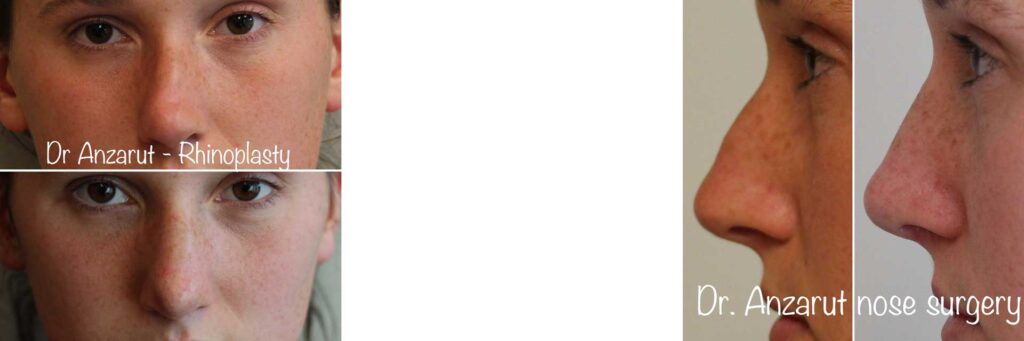
Rhinoplasty before & after case 13769

Nose Surgery (Rhinoplasty) Risks and Complications

Since Nose Surgery is a personal decision, you will need to weigh the risks and benefits of the procedure. After explaining the risks involved in the surgery, your plastic surgeon will ask you sign consent forms.

Be sure that you understand any potential risks and complications.

Examples of the risks involved in a Rhinoplasty include: scarring, infection, pain, numbness, and skin discoloration.

Your nose may have any odd shape after surgery, but this will improve over time.

It is important to address any questions you may have about the procedure with your doctor.

Cost of Nose Surgery in Vancouver, BC

The cost of Nose Surgery will be dependent on the surgeon’s experience.

Reconstructive Rhinoplasty may be covered by your health insurance, otherwise financing may be offered. Ask your insurer if you are unsure about your coverage.

Educational Rhinoplasty Videos

Push-Up Asian Rhinoplasty

Frequently Asked Questions (FAQ)

1. What is the average cost of Rhinoplasty in Vancouver, BC?

In Vancouver, a primary cosmetic Rhinoplasty (Nose Surgery) typically ranges from $10,000 to $16,000 CAD. Complex revision rhinoplasty utilizing rib cartilage grafts can exceed $20,000. This fee encompasses the FRCSC surgeon’s expertise, FRCPC anesthesiologist, and operating room time at an NHMSFAP-accredited surgical facility. We provide a transparent, itemized quote during your consultation, ensuring no hidden costs. Medical financing is available through Canadian partners like Beautifi.

2. Does the BC Medical Services Plan (MSP) cover Nose Surgery?

Purely cosmetic changes to the nasal shape (like reducing a dorsal hump) are never covered by the Medical Services Plan (MSP). However, functional airway surgery, such as a Septoplasty (repairing a deviated septum) or turbinate reduction to improve breathing, may be partially covered by MSP if documented medical criteria are met. We can perform functional and cosmetic rhinoplasty simultaneously, clearly separating the private and public billing components.

3. What is the difference between an Open and Closed Rhinoplasty?

In an Open Rhinoplasty, a small incision is made across the columella (the tissue separating the nostrils), lifting the skin for maximum visibility of the nasal framework. This is the gold standard for complex tip refinement and revisions. A Closed Rhinoplasty (Endonasal) places all incisions entirely inside the nostrils, resulting in zero external scarring and slightly less post-operative swelling (edema), but limits the surgeon’s ability to perform extensive cartilage modifications.

4. How long is the recovery time for a nose job in the Lower Mainland?

Most Vancouver patients require 7 to 10 days of social downtime. You will wear an external nasal splint (cast) for the first week to support the healing nasal dorsum. Swelling and bruising around the eyes (black eyes) usually peak at Day 3 and resolve by Day 10. You can return to desk work after the cast is removed, but strenuous cardiovascular exercise must be avoided for 4 to 6 weeks to prevent late nosebleeds (epistaxis).

5. When will I see my final Rhinoplasty results?

While you will see a noticeable improvement the day your cast is removed, true final results require profound patience. The nose retains micro-swelling longer than any other facial feature. Approximately 80% of swelling resolves within 3 months, but it takes a full 12 to 18 months for the skin to completely shrink-wrap to the newly sculpted underlying bone and cartilage framework, particularly at the thick-skinned nasal tip.

6. What is a Septorhinoplasty?

A Septorhinoplasty is a dual-purpose surgery combining aesthetic contouring (Rhinoplasty) with functional airway reconstruction (Septoplasty). For Vancouver patients suffering from chronic congestion, sleep apnea, or sports injuries, this unified procedure straightens the nasal septum, reduces enlarged inferior turbinates, and refines the external nasal profile simultaneously under one general anesthetic, optimizing both form and airflow.

7. Do you break the nose during surgery?

We do not haphazardly “break” the nose. When narrowing a wide nasal bridge or closing an “open roof” deformity after removing a dorsal hump, we perform precise osteotomies. This involves making controlled micro-fractures in the nasal bones using delicate ultrasonic instruments (piezoelectric surgery) or osteotomes. Modern osteotomies are highly controlled and minimize the extreme pain patients fear, though they do contribute to temporary post-operative bruising.

8. What is an Alar Base Reduction?

An Alar Base Reduction (or alarplasty) is a specific surgical technique used to narrow wide nostrils or reduce nasal flaring. The surgeon excises tiny, wedge-shaped pieces of tissue from the base of the alar lobules (where the nostrils meet the cheeks). The resulting millimeter-long incisions heal exceptionally well, hiding perfectly within the natural alar-facial groove, ensuring a balanced, proportionate lower third of the nose.

9. Where do you get cartilage for nose grafting?

Complex rhinoplasties—especially revisions or ethnic rhinoplasties—often require extra cartilage for structural support and tip projection. We primarily harvest septal cartilage from inside your nose. If the septum is depleted, we can seamlessly harvest auricular (ear) cartilage or costal (rib) cartilage. Using your own autologous tissue guarantees zero risk of biological rejection and provides the strongest, most durable scaffolding for lifelong results.

10. Are there non-surgical alternatives to Rhinoplasty?

A Liquid Rhinoplasty (Non-Surgical Nose Job) utilizes hyaluronic acid dermal fillers (like Juvéderm) to temporarily camouflage a dorsal hump or elevate a drooping nasal tip. While an excellent “test drive” offering zero downtime in our Vancouver clinic, fillers only add volume; they cannot make a large nose smaller or fix a deviated septum. Results last 9-12 months, whereas surgical rhinoplasty delivers a permanent anatomical correction.

11. Will my breathing change after cosmetic nose surgery?

A meticulously planned aesthetic rhinoplasty should never compromise nasal function. Expert FRCSC plastic surgeons utilize preservation rhinoplasty techniques and structural grafting (like spreader grafts) to maintain or actually widen the internal nasal valves. During your consultation, we thoroughly assess both your internal airway and external anatomy to ensure your post-operative breathing is either preserved or functionally improved.

12. Is packing placed inside the nose after surgery?

Outdated, painful nasal packing is rarely used in our modern Vancouver practice. Instead, we use thin, flexible internal silicone splints (Doyle splints) strategically placed alongside the septum to maintain airway support and prevent internal scar tissue (synechiae). These silicone splints have a hollow airway tube, allowing you to breathe immediately post-op, and are comfortably removed in the clinic at Day 5-7.

13. What type of anesthesia is required?

To guarantee absolute airway protection and zero discomfort, Rhinoplasty is performed under General Anesthesia. In our NHMSFAP-accredited facility, your sedation is managed exclusively by a Board-Certified Anesthesiologist (FRCPC). They utilize an endotracheal tube to prevent any blood from draining into your throat during surgery, ensuring the highest standard of intraoperative safety for facial plastic surgery in British Columbia.

14. How do I choose the best Rhinoplasty surgeon in Vancouver?

Rhinoplasty is widely considered the most complex operation in plastic surgery. Ensure your surgeon is an FRCSC specialist with explicit, high-volume experience in facial aesthetics. Verify their standing with the College of Physicians and Surgeons of BC. Analyze their galleries for natural results—avoiding the “scooped” bridge or “piggy” over-rotated tip—and ensure they utilize 3D imaging to align on realistic surgical goals.

15. What is Revision Rhinoplasty?

Revision Rhinoplasty is a complex secondary surgery performed to correct aesthetic dissatisfaction or functional breathing issues (like nasal valve collapse) resulting from a previous nose job. Revisions require advanced structural grafting, often utilizing rib cartilage, to rebuild compromised architecture and manage severe internal scar tissue. We regularly treat patients from across the Lower Mainland seeking to correct botched procedures performed overseas.

16. How do I sleep after a nose job?

To minimize severe facial swelling and prevent asymmetric fluid pooling, you must sleep strictly on your back, elevated at a 30 to 45-degree angle, for the first two weeks. We highly recommend purchasing a wedge pillow system. Sleeping on your side or stomach risks physically shifting the healing nasal bones or putting pressure on delicate cartilage grafts before they fuse.

17. Why must I quit smoking before nasal surgery?

Nicotine is a potent vasoconstrictor that starves the nasal skin envelope of vital oxygen and blood flow. Smoking before surgery drastically increases the risk of tissue necrosis (skin death), severe infection, and graft failure. To ensure safe, predictable wound healing, Vancouver surgeons mandate that you are completely nicotine-free for a strict minimum of 4 to 6 weeks before and after your procedure.

18. Will I have visible scars after a nose job?

In a Closed Rhinoplasty, all incisions are internal, leaving zero external scars. In an Open Rhinoplasty, a tiny 3mm incision is made across the columella. By using meticulous, tension-free suturing techniques, this specific scar heals exceptionally well and typically fades into a nearly invisible, pale line within months. Scars from alar base reductions are similarly hidden in the natural creases of the nostrils.

19. Can I wear glasses after Rhinoplasty?

You absolutely cannot rest heavy prescription glasses or sunglasses directly on your nasal bridge for 4 to 6 weeks post-surgery. The pressure can physically indent the healing, newly fractured nasal bones, causing permanent contour deformities. Vancouver patients must use contact lenses, tape their glasses to their forehead, or utilize specialized support devices (like RhinoShield) until the bones are fully calcified.

20. When can I return to the gym and play sports?

Light walking is mandatory immediately to prevent blood clots. However, activities that raise your blood pressure (heavy lifting, running) are strictly banned for 4 weeks to prevent severe nosebleeds (epistaxis) and prolonged swelling. Contact sports (hockey, basketball) or activities with a risk of facial trauma must be completely avoided for a minimum of 3 to 6 months until the nasal framework achieves maximum tensile strength.

Book a Consultation Today

Service Area Locations

Dr Anzarut Plastic Surgery in Vancouver serves Kitsilano, Burnaby, Coquitlam, New Westminster, Richmond, Surrey, Delta, North Vancouver, West Vancouver, Langley, and White Rock in Metro Vancouver (Lower Mainland), British Columbia.

Dr Anzarut Plastic Surgery in Duncan serves Victoria, Nanaimo, Courtenay, Campbell River, Parksville, Port Alberni, Ladysmith, Cowichan Valley, and Comox Valley on Vancouver Island.

Things to Consider When Choosing Nose Surgery (Rhinoplasty) in Vancouver

Rhinoplasty is widely considered the most complex and structurally demanding procedure in plastic surgery. Altering millimeter-thick cartilage fundamentally changes facial harmony and airway mechanics. Whether you are correcting a deviated septum, reducing a dorsal hump, or seeking a complex revision, this comprehensive checklist covers every clinical, financial, and logistical detail you must know before booking a rhinoplasty in Vancouver, British Columbia.

I. Surgeon & Facility Credentials (The “Who” and “Where”)

  1. FRCSC Certification: Verify your surgeon is a Fellow of the Royal College of Physicians and Surgeons of Canada in Plastic Surgery or Otolaryngology.
  2. “Cosmetic” vs. “Plastic” Surgeon: In BC, any general practitioner can legally call themselves a “cosmetic surgeon.” Only an FRCSC has completed a specialized 5+ year surgical residency.
  3. NHMSFAP Accreditation: Your surgery must occur in a private facility fully accredited by the Non-Hospital Medical and Surgical Facilities Accreditation Program (NHMSFAP) of BC.
  4. CPSBC Standing: Search the College of Physicians and Surgeons of BC directory to confirm your surgeon has a clean disciplinary record.
  5. Hospital Privileges: A top-tier Vancouver surgeon will hold admitting privileges at major local hospitals like Vancouver General Hospital (VGH) or St. Paul’s.
  6. Anesthesia Provider: Confirm your general anesthesia will be administered by a Board-Certified Anesthesiologist (FRCPC), ensuring maximum airway protection.
  7. Local Expertise: Choosing a specialized local clinic, such as Cosmetic Surgery Vancouver BC, ensures your treatment aligns with West Coast aesthetic standards and safety protocols.
  8. Rhinoplasty Volume: Ask what percentage of the surgeon’s practice is dedicated specifically to the nose. It should be a core focus, not an occasional procedure.
  9. Revision Mastery: Surgeons like Dr. Anzarut who routinely perform complex secondary (revision) rhinoplasties possess a vastly superior understanding of underlying structural failures.
  10. Malpractice Insurance: Verify the surgeon carries robust coverage through the Canadian Medical Protective Association (CMPA).

II. Anatomy & Aesthetic Proportions

  1. The Nasofrontal Angle: The angle where the forehead meets the nasal bridge. Ideally between 115 and 130 degrees for a natural slope.
  2. The Nasolabial Angle: The angle between the upper lip and the columella. Ideal is 90-95 degrees for men, and 95-105 degrees for women (preventing a “piggy” over-rotated look).
  3. Supratip Break: A subtle, desirable dip just above the nasal tip, creating definition between the bridge and the tip lobule.
  4. Skin Thickness: Thick, sebaceous skin (common in certain ethnicities) hides structural changes and holds swelling longer. Very thin skin shows every minor cartilage irregularity.
  5. The Columella: The bridge of tissue separating the nostrils. A “hanging columella” can be surgically retracted for a cleaner profile.
  6. Alar Flaring: Nostrils that widen excessively when smiling. Treated with an alar base reduction.
  7. Dorsal Hump: A bump on the bridge composed of both upper lateral cartilage and nasal bone.
  8. Tip Bulbosity: A wide or round tip caused by wide lower lateral cartilages (LLCs). Refined via cephalic trim and suturing techniques.
  9. Facial Asymmetry: No face is perfectly symmetrical. A rhinoplasty improves nasal symmetry but cannot correct underlying asymmetrical cheekbones or jaws.
  10. Chin Proportion (Microgenia): A weak, recessed chin makes a nose look disproportionately large. A concurrent Chin Implant (Genioplasty) is frequently recommended to balance the profile.

III. Functional Airway Considerations (Breathing)

  1. The Nasal Septum: The central wall dividing the airway. A deviated septum physically blocks airflow and must be straightened (Septoplasty).
  2. Inferior Turbinates: Structures inside the nose that warm and humidify air. If enlarged (hypertrophy), they block breathing and require surgical reduction.
  3. Internal Nasal Valve: The narrowest part of the nasal airway. Cosmetic reduction can accidentally collapse this valve if not supported by spreader grafts.
  4. External Nasal Valve: The nostril opening. Weak cartilage here causes the nostrils to collapse inward when you inhale deeply.
  5. Septorhinoplasty: The combined procedure that addresses both aesthetic shaping and internal airway reconstruction under one anesthetic.
  6. Sleep Apnea & Snoring: Improving the nasal airway can alleviate mild snoring, but is not a standalone cure for Obstructive Sleep Apnea (OSA).
  7. Allergic Rhinitis: Surgery fixes structural blockages but does not cure mucosal swelling caused by seasonal Vancouver allergies.
  8. CPAP Users: You cannot use a CPAP mask over your nose for several weeks post-op. Discuss alternative full-face masks with your respirologist.
  9. Nasal Endoscopy: During your consult, the surgeon should use a speculum or endoscope to physically examine deep internal blockages.
  10. Olfactory Nerve: Rhinoplasty very rarely affects the sense of smell permanently, though temporary loss due to severe mucosal swelling is common.

IV. Surgical Techniques & Approaches

  1. Open Rhinoplasty: An incision is made across the columella. Provides unparalleled visibility for complex tip grafting and structural revisions.
  2. Closed (Endonasal) Rhinoplasty: All incisions are hidden inside the nostrils. Less swelling and zero external scars, but limits structural visibility for the surgeon.
  3. Piezoelectric Surgery (Ultrasonic Rhinoplasty): Advanced technology using ultrasonic waves to sculpt and reshape the nasal bones without damaging surrounding soft tissue, drastically reducing bruising.
  4. Standard Osteotomies: Using a medical osteotome (chisel) to make controlled micro-fractures to narrow the nasal bridge.
  5. Preservation Rhinoplasty: A modern technique that lowers the nasal bridge from underneath (push-down or let-down technique) while preserving the natural anatomy of the nasal dorsum.
  6. Structural Rhinoplasty: The philosophy of rebuilding the nose using strong cartilage grafts to ensure it doesn’t collapse or change shape over the decades.
  7. Alarplasty: Excision of small wedges of skin at the base of the nostrils to reduce flaring.
  8. Tip Suturing: Using permanent or slow-dissolving sutures to mathematically fold and narrow the tip cartilages without excising them.
  9. Cephalic Trim: Removing the upper portion of the lower lateral cartilages to refine a bulbous tip.
  10. Radix Grafting: Adding crushed cartilage to the top of the bridge (between the eyes) to elevate a deep nasal starting point.

V. Grafts & Materials

  1. Autologous Grafts: Using your own tissue for structural support. This is the absolute gold standard to prevent rejection and infection.
  2. Septal Cartilage: The primary donor site. Harvested from inside the nose during surgery. Strong, straight, and easy to carve.
  3. Conchal (Ear) Cartilage: Harvested from behind the ear if septal cartilage is depleted. Excellent for curved grafts like alar rim reconstruction.
  4. Costal (Rib) Cartilage: Required for major revisions or severe saddle-nose deformities. Provides massive amounts of strong, straight structural scaffolding.
  5. Cadaveric Rib (Allograft): Sterilized donor rib cartilage. Saves you a rib incision, but carries a slightly higher long-term absorption or warping rate.
  6. Spreader Grafts: Rectangular pieces of cartilage placed along the septum to widen the internal nasal valve and prevent the “inverted-V deformity.”
  7. Columellar Strut Graft: A pillar of cartilage placed between the nostrils to support the tip and prevent it from drooping when you smile.
  8. Shield Graft: A shield-shaped piece of cartilage placed on the very tip of the nose to increase projection and definition.
  9. Temporalis Fascia: Deep connective tissue harvested from the temple to camouflage grafts in patients with extremely thin nasal skin.
  10. Silicone/Gore-Tex Implants: Synthetic nasal implants. Common in Asia but strongly discouraged by top North American surgeons due to high long-term extrusion and infection rates.

VI. Financials & BC Medical Services Plan (MSP)

  1. Cosmetic MSP Non-Coverage: Purely aesthetic changes (hump reduction, tip refining) are never covered by MSP.
  2. Functional MSP Coverage: A functional Septoplasty or turbinate reduction may be covered by MSP if documented medical criteria are met.
  3. Split Billing: If you have functional breathing issues and want cosmetic changes, the surgeon can bill MSP for the medical portion and you pay privately for the cosmetic portion.
  4. Private Cost Range in Vancouver: A primary cosmetic rhinoplasty typically ranges from $10,000 to $16,000 CAD.
  5. Revision Cost Range: Revisions requiring rib grafts are highly complex and can range from $16,000 to $25,000+ CAD.
  6. 5% GST: The purely cosmetic portion of the surgical fee is subject to the 5% GST in Canada.
  7. Medical Financing: Lower Mainland clinics partner with Beautifi or Medicard to offer flexible monthly payment plans.
  8. Quote Transparency: Ensure your quote explicitly includes the surgeon’s fee, OR facility time, FRCPC anesthesia, and post-op casting.
  9. Tax Deductibility: Purely cosmetic rhinoplasty is generally not a tax-deductible medical expense by the CRA.
  10. Time Off Work: Budget 7 to 10 days for desk jobs. Physical jobs require 3-4 weeks off due to bleeding risks.

VII. Pre-Operative Preparation

  1. Nicotine Ban: You must stop smoking, vaping, or using nicotine pouches for 4-6 weeks pre-op to prevent tissue necrosis (skin death on the tip).
  2. Blood Thinners: Discontinue Aspirin, Advil, Vitamin E, Fish Oil, and Ginseng two weeks prior to minimize severe bruising and epistaxis (nosebleeds).
  3. Accutane Clearance: You must be off isotretinoin (Accutane) for at least 6 months to ensure normal scar healing.
  4. LifeLabs Bloodwork: You will likely need pre-op blood tests (CBC, clotting factors) at a local LifeLabs two weeks prior.
  5. Nasal Sprays: Discontinue decongestant sprays (like Otrivin) to prevent mucosal rebound swelling.
  6. Post-Op Escort: You cannot take an Uber or BC Transit alone after general anesthesia. A responsible adult must drive you home.
  7. Home Setup: Purchase a wedge pillow system. You must sleep elevated at a 45-degree angle to minimize severe facial edema.
  8. Wardrobe Prep: Buy button-down or zip-up shirts. You cannot pull tight sweaters over your freshly casted nose.
  9. Meal Prep: Cook and freeze soft, low-sodium meals. Chewing tough foods will be uncomfortable for the front teeth/upper lip.
  10. Hygiene: Wash your face with an antibacterial soap (like Hibiclens) the morning of surgery to prevent staph infections.

VIII. The Surgical Experience & Immediate Recovery

  1. Anesthesia Type: Rhinoplasty is performed under General Anesthesia with an endotracheal tube to ensure blood does not drain into your lungs.
  2. Duration: A primary rhinoplasty takes 2 to 3.5 hours. Complex revisions can take 4 to 6 hours.
  3. DVT Prevention: Sequential Compression Devices (SCD boots) will massage your lower legs in the OR to prevent blood clots.
  4. Tumescent Fluid: A mixture of saline and epinephrine is injected into the nose to hydro-dissect tissues and drastically minimize bleeding.
  5. The Cast: You will wake up with a hard thermoplastic or metal splint taped to the bridge of your nose.
  6. Internal Splints: Instead of painful gauze packing, surgeons use hollow silicone Doyle Splints inside the septum to support the airway.
  7. The Drip Pad: A small piece of gauze taped under your nostrils. It will catch pink, bloody drainage for the first 24-48 hours.
  8. Swelling Peak: Facial swelling and “black eyes” peak at Days 3 to 4.
  9. Cast Removal: The external cast and internal silicone splints are removed in the clinic around Day 6 to 8.
  10. Pain Control: Patients describe the pain as a severe sinus headache and intense congestion, easily managed with prescribed Tylenol or mild opioids.

IX. Long-Term Healing & Complications (The “What Ifs”)

  1. The “Shrink-Wrap” Effect: The skin takes 12 to 18 months to fully adhere to the new cartilage framework. The tip will look swollen and undefined for months.
  2. Tip Drop: The nasal tip is intentionally over-rotated slightly during surgery because it will naturally drop 1-2 millimeters as the healing tissues relax.
  3. Numbness: The tip of the nose and upper lip will be completely numb and stiff for 3-6 months.
  4. Pollybeak Deformity: A complication where scar tissue forms above the tip, resembling a parrot’s beak. Often preventable with proper taping and steroid injections (Kenalog).
  5. Inverted-V Deformity: The collapse of the upper lateral cartilages, creating a visible upside-down “V” on the bridge. Prevented with spreader grafts.
  6. Saddle Nose Deformity: The total collapse of the nasal bridge due to over-resecting the septum.
  7. Epistaxis: A severe nosebleed requiring cauterization in the ER. Prevented by avoiding heavy lifting and sneezing with your mouth open.
  8. Bony Callus: The body occasionally forms a small bump of hard bone over the fracture sites. Can be rasped down in the office later.
  9. Asymmetry & Minor Flaws: Healing is biological, not mathematical. Perfection is impossible, and minor asymmetries are normal.
  10. Revision Rate: The global average revision rate for rhinoplasty is 10-15%. Wait a full 12 months before judging the final result or pursuing a revision.

X. Lifestyle & Vancouver Logistics

  1. Glasses Ban: You cannot rest heavy prescription glasses or sunglasses on your nasal bridge for 6 weeks. Tape them to your forehead or use contact lenses.
  2. UV Protection: Vancouver sun can permanently darken the skin on your swollen nose and any external scars. Wear SPF 50 and a hat outdoors.
  3. Exercise Return: Light walking on the Vancouver Seawall is mandatory immediately. Heavy lifting, inversions, and vigorous cardio are banned for 4 weeks.
  4. Contact Sports: Hockey, martial arts, or any sport with a risk of facial trauma must be avoided for 3 to 6 months.
  5. Traffic Logistics: Avoid the Lions Gate or Ironworkers bridges during rush hour on your painful drive home from the surgical center.
  6. Winter Recovery: Fall and winter are the best times for a nose job in Vancouver, as cold air is soothing and scarves easily hide bruising.
  7. Flying Restrictions (YVR): You cannot fly for at least 2 weeks post-op due to pressure changes causing severe sinus pain and bleeding.
  8. Avoid Medical Tourism: Traveling abroad for cheap rhinoplasty leaves you stranded if a severe nosebleed or airway collapse occurs back in BC. Revisions in Canada will cost triple the initial savings.
  9. Pressure Tactics: If a clinic pushes you to book immediately with a “limited-time discount,” walk away. Medical safety has a fixed cost.
  10. The Psychological Payoff: The recovery requires extreme patience while the swelling resolves, but the ultimate reward is profound facial harmony, functional breathing, and lifelong confidence.