Mommy Makeover

Are you thinking about getting a mommy makeover in Vancouver? A Mommy Makeover is a combination of cosmetic surgery procedures designed to improve the appearance of your body after a pregnancy.

Each patient is unique and the custom cosmetic enhancement plan for a complete transformation is personalized.

A mommy makeover may include a tummy tuck, breast lift, liposuction, and skin rejuvenation.

Am I a Candidate For a Mommy Makeover?

You may be a candidate for a Mommy Makeover in Vancouver, BC if you are in good physical health and are not planning any future pregnancies.

We will be happy to meet with you for an initial consultation and discuss treatment options that are available to you.

Please be aware that a Mommy Makeover is not a substitute for weight loss or exercise and the results can be diminished by significant fluctuations in body weight.

Regain your pre-pregnancy figure with a customized Mommy Makeover in Vancouver. Dr. Anzarut combines tummy tuck (abdominoplasty), breast lift (mastopexy), and liposuction to repair diastasis recti and restore lost volume. Serving Vancouver, Burnaby, Coquitlam, Richmond, Surrey, Victoria, and Nanaimo. Schedule your transformation today.

Mommy Makeover Procedures

The hallmark of a Mommy Makeover in Vancouver is the ability to address multiple physical concerns—such as diastasis recti, mastopexy, and subcutaneous fat—in a single surgical session. By combining procedures, patients from the Lower Mainland can achieve a comprehensive transformation with a unified recovery period. Below are the core components tailored to restore your pre-pregnancy silhouette.

A Mommy Makeover may include a combination of the following procedures:

Tummy Tuck (Abdominoplasty)

For many Vancouver mothers, the abdominal wall undergoes permanent changes during pregnancy that diet and exercise cannot resolve. A tummy tuck (abdominoplasty) at our clinic specifically targets diastasis recti (separation of the rectus abdominis muscles) and removes panniculus (excess skin) below the navel. By tightening the internal “girdle” of muscles and excising tissue often marred by striae (stretch marks), we restore a flat, firm abdominal contour. This procedure is frequently performed at accredited Vancouver surgical centres, providing a more athletic profile and improved core stability.

Breast Lift (Mastopexy)

Pregnancy and breastfeeding often lead to breast ptosis, where the skin loses elasticity and the nipple-areolar complex shifts downward. A mastopexy, or breast lift, is designed to excise redundant skin and reshape the internal breast tissue to a more youthful, elevated position. Our approach focuses on restoring a “perky” appearance without necessarily changing the volume. For patients across British Columbia seeking to correct sagging, this procedure provides a dramatic aesthetic improvement, ensuring the breasts sit naturally and proportionately on the chest wall.

Breast Augmentation (Implants)

To address the “deflated” appearance that often follows lactation, breast augmentation utilizes highly cohesive silicone gel or saline implants to restore lost volume. During your consultation in Vancouver, BC, we select the ideal implant profile and projection to complement your frame. Whether placed via submuscular or subglandular pockets, augmentation fills the upper pole of the breast, creating a harmonious balance with your new abdominal contours. Many patients choose to combine this with a lift for the ultimate “augmentation-mastopexy” rejuvenation.

Liposuction

While not a weight-loss tool, liposuction is the “finishing touch” of a Mommy Makeover, used to refine the flanks, hips, and thighs. We utilize advanced tumescent liposuction or ultrasound-assisted techniques to target stubborn adipose tissue that is resistant to postpartum fitness routines. By sculpting these transition zones, we ensure a seamless flow between the abdomen and the rest of the body. This precision contouring helps Vancouver patients achieve the “hourglass” shape often lost during the gestational period.

Skin and Face Rejuvenation Treatments

A complete transformation often extends beyond the body. Our Vancouver medical aesthetics suite offers non-surgical enhancements to address “tired” eyes or pregnancy-induced melasma. BOTOX Cosmetic® (neuromodulators) effectively softens glabellar lines and crow’s feet, while dermal fillers like Juvéderm® restore volume to the cheeks and nasolabial folds. For skin texture, chemical facial peels or IPL (Intense Pulsed Light) treatments target hyperpigmentation and fine lines, ensuring your facial radiance matches your rejuvenated physique.

For more information about our customized Mommy Makeover procedures, please contact Dr. Anzarut to schedule a consultation.

Dr Anzarut Plastic Surgery offers mommy makeovers for BC residents, including Vancouver, Burnaby, Coquitlam, Richmond, Surrey, Victoria, and Nanaimo.

Mommy Makeover Results

A Mommy Makeover can be a cost effective, comprehensive solution to restore your pre-pregnancy body and enhance your appearance.

The results can be dramatic depending on the combination of procedures used.

Combination surgery can help patients achieve their goals in a much quicker time frame and feel more confident about their bodies.

While long lasting, a Mommy Makeover will not stop the aging process. Results can be extended with a healthy lifestyle and by maintaining a consistent body weight.
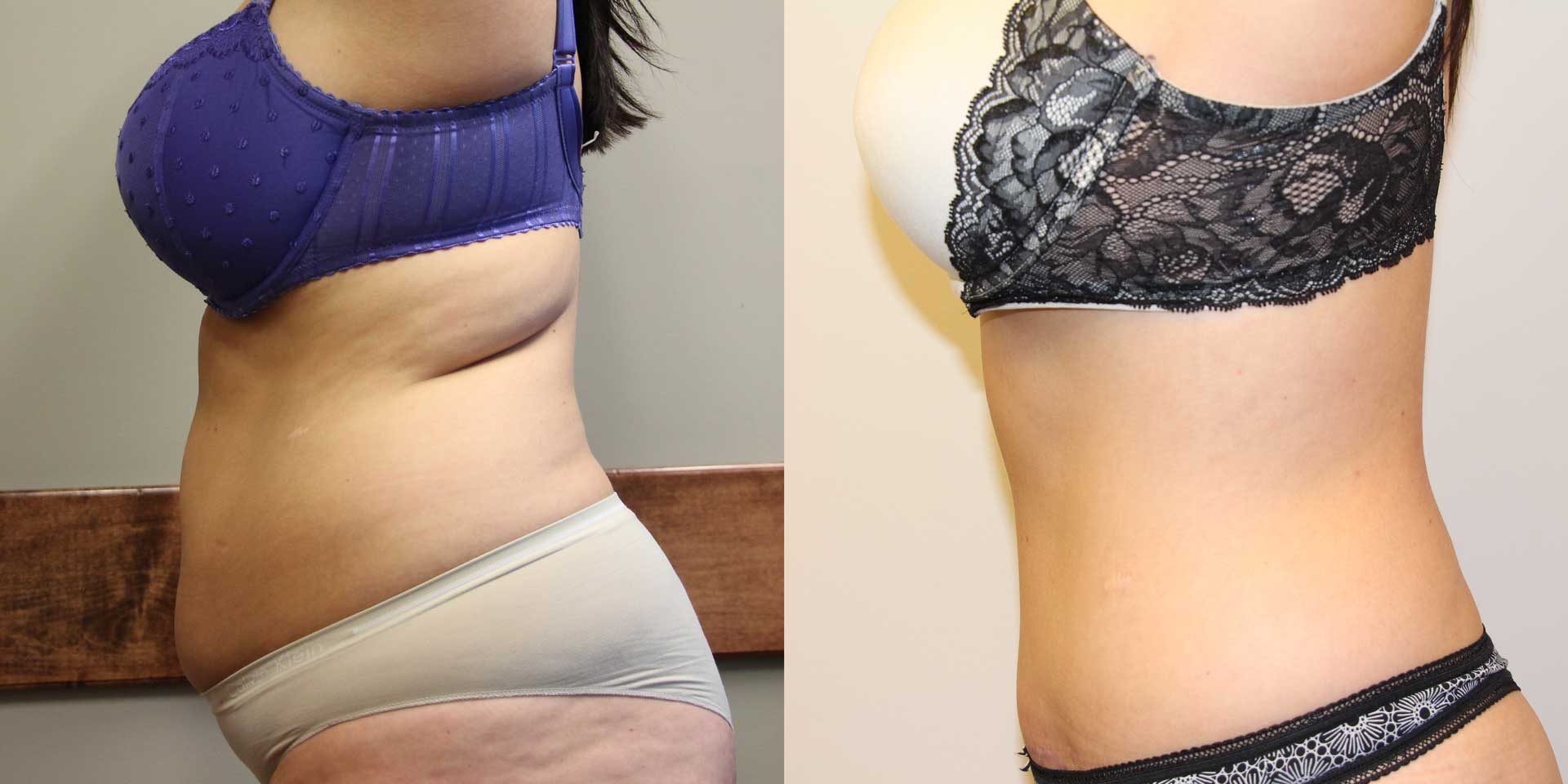
tummy tuck case 16472 before and after photo 02
mommy makeover before and after photo (case 16472) showing post-op results

See More Mommy Makeover “Before and After” Photos

Cost of a Mommy Makeover in Vancouver, BC

The cost of a Mommy Makeover will depend on the types of procedures performed. Contact us for a consultation.

Frequently Asking Questions (FAQ)

1. What is the average cost of a Mommy Makeover in Vancouver?

In Vancouver, a comprehensive Mommy Makeover typically ranges from $20,000 to $35,000 CAD. This fee varies based on the specific procedures combined (e.g., Abdominoplasty, Mastopexy, breast implants, and Liposuction). Your personalized quote includes the surgeon’s fee, FRCPC anesthesiologist, OR time at an NHMSFAP-accredited facility, and compression garments. Because this surgery is highly customized, we provide a transparent, itemized breakdown during your consultation to ensure no hidden costs.

2. What procedures are included in a Mommy Makeover?

A Mommy Makeover is a bespoke combination of breast and body contouring procedures designed to reverse pregnancy-related changes. Standard components include a Tummy Tuck (Abdominoplasty) to repair stretched abdominal muscles and remove loose skin, paired with breast rejuvenation—usually a Breast Lift (Mastopexy), Breast Augmentation (implants), or a reduction. We often incorporate Lipo 360 (liposuction of the abdomen and flanks) to sculpt a seamless, hourglass silhouette.

3. Is a Mommy Makeover covered by MSP in BC?

As an elective cosmetic surgery, a Mommy Makeover is not covered by the Medical Services Plan (MSP) of British Columbia. The only rare exception is if a massive Breast Reduction is required for chronic back/neck pain, which may partially qualify under strict MSP criteria. For all cosmetic components, we partner with Canadian medical financing companies like Beautifi and Medicard to provide our Vancouver patients with flexible monthly payment plans.

4. Do I need a breast lift or just implants?

During pregnancy and nursing, breasts expand and subsequently deflate, causing tissue ptosis (sagging). If your nipples sit below the inframammary fold (breast crease), implants alone will not correct the droop; you require a Mastopexy (Breast Lift) to elevate the nipple-areolar complex. If you have also lost volume, we use cohesive silicone gel implants (“gummy bears”) concurrently with the lift to restore youthful upper-pole fullness.

5. What is Diastasis Recti and does a tummy tuck fix it?

Diastasis Recti is the vertical separation of the rectus abdominis muscles caused by a growing uterus. No amount of core exercise can sew this connective tissue back together. During a full Abdominoplasty, we perform muscle plication—stitching the abdominal muscles back to the midline like an internal corset. This flattens the persistent post-pregnancy “pooch,” restores core strength, and dramatically narrows your waistline.

6. Where is the surgery performed?

Patient safety is our absolute priority. All Mommy Makeovers are performed in a state-of-the-art private surgical centre accredited by the Non-Hospital Medical and Surgical Facilities Accreditation Program (NHMSFAP) of BC. Located conveniently in the Lower Mainland, our facility utilizes modern monitoring equipment and is staffed by highly trained perioperative nurses and specialists to ensure your complex combination surgery is completely safe.

7. How long is the recovery time?

Expect to take 2 to 3 weeks off from desk work and driving. Because we are repairing core muscles and breast tissue simultaneously, your mobility is initially limited. You must avoid lifting anything over 10 lbs (including toddlers or heavy groceries) for 4 to 6 weeks to protect the internal diastasis recti sutures. We provide a detailed post-operative protocol to guide your safe recovery.

8. Can I have more children after a Mommy Makeover?

While it is medically safe to get pregnant after a Mommy Makeover, doing so will likely compromise your surgical results. A subsequent pregnancy will re-stretch the abdominal skin and potentially rupture the muscle plication (corset repair) achieved during the tummy tuck. To protect your financial and physical investment, we strongly advise Vancouver patients to wait until they are definitively finished expanding their families before booking.

9. How long should I wait after breastfeeding to get surgery?

You must wait a minimum of 6 months after completely stopping breastfeeding before undergoing breast surgery. This waiting period allows your milk ducts to shrink, the breast tissue to fully stabilize, and the glandular volume to settle into its baseline state, ensuring accurate implant sizing and minimizing infection risks.

10. Is it safe to combine multiple surgeries at once?

Combining procedures is generally safe for healthy patients when adhering to strict medical limits. By combining surgeries, you endure only one general anesthetic and one recovery period. However, to minimize risks like Deep Vein Thrombosis (DVT) or lidocaine toxicity, we strictly limit total surgical time and fat removal volume. If your surgical plan is too extensive, we may recommend staging the procedures for your safety.

11. What type of anesthesia is used?

Because a Mommy Makeover is a major, multi-hour surgery, it requires General Anesthesia. You will be completely asleep and pain-free. To guarantee the highest level of safety, your anesthesia is administered exclusively by a specialist Fellow of the Royal College of Physicians and Surgeons of Canada (FRCPC). They monitor your airway, core temperature, and fluid balance meticulously throughout the operation.

12. Do you use surgical drains for a tummy tuck?

Yes, most patients require 1 or 2 Jackson-Pratt (JP) drains after a full tummy tuck. These small, closed-suction tubes prevent the accumulation of fluid (seroma) between the abdominal skin and the repaired muscle wall. Drains are typically removed in our Vancouver office 5 to 10 days post-op. While slightly cumbersome, they are critical for ensuring smooth healing.

13. What kind of scars will I have?

For the abdomen, the abdominoplasty incision is placed very low, extending horizontally hip-to-hip, designed to hide completely beneath underwear or bikini bottoms. Breast scars depend on the degree of lift required: a minor lift uses a periareolar (donut) scar, while significant ptosis requires a vertical (lollipop) or inverted-T (anchor) scar. Scars mature from red to thin, pale lines over 12-18 months.

14. Can liposuction or a tummy tuck remove my stretch marks?

Liposuction removes deep subcutaneous fat but does nothing for the skin surface. However, a Tummy Tuck physically excises the loose skin located between your belly button and pubic bone. Consequently, any stretch marks (striae) located within that excised lower abdominal skin are permanently removed. Stretch marks remaining on the upper abdomen are simply pulled lower and tightened, making them appear less noticeable.

15. What is the difference between a Mini and Full Tummy Tuck?

A Mini Tummy Tuck only removes a small crescent of loose skin below the belly button and does not repair upper abdominal muscles. It is rarely sufficient for postpartum women. A Full Tummy Tuck addresses the entire abdomen, excising massive amounts of loose skin, repairing diastasis recti from the sternum to the pubis, and repositioning the belly button (umbilicoplasty) for a completely flat core.

16. Are there BMI limits for this surgery?

For optimal aesthetic results and safety, your Body Mass Index (BMI) should ideally be under 30 (or a strict maximum of 32). Elevated BMI significantly increases the risks of anesthesia complications, wound separation, and post-operative infections. A Mommy Makeover is for body contouring, not weight loss. We advise reaching a stable weight for at least 3 months prior to surgery.

17. How soon can I exercise on the Vancouver Seawall after surgery?

You must begin short, slow walks around your house on Day 1 to prevent blood clots (DVT). By weeks 2-3, gentle walks on flat terrain—like the Vancouver Seawall—are excellent for recovery. However, high-impact cardio (running), heavy lifting, or targeted core exercises (Pilates, crunches) are strictly prohibited for 6 to 8 weeks to prevent tearing the internal abdominal muscle repair.

18. Will I need to stay overnight at the clinic?

Depending on the length of your surgery and the volume of tissue removed, we frequently recommend an overnight stay at our private surgical facility or a designated post-op recovery hotel in Vancouver. You will be monitored by an experienced registered nurse who manages your pain medications, assists with mobility, and monitors your drains, ensuring your first 24 hours are as comfortable as possible.

19. How do I prepare my home for recovery?

Preparation dictates your recovery success. Establish a “recovery zone” at home with a mechanical recliner or wedge pillows, as you must sleep with your upper body elevated and knees bent to reduce tension on your abdominal incision. Fill all prescriptions locally, arrange full-time childcare for the first two weeks, and prepare high-protein, low-sodium meals to minimize post-operative swelling.

20. How do I choose the best Mommy Makeover surgeon in Vancouver?

Do not compromise on credentials. Ensure your surgeon is a Fellow of the Royal College of Physicians and Surgeons of Canada (FRCSC) specifically in Plastic Surgery. Review their specific Mommy Makeover before-and-after gallery, looking for natural belly buttons (umbilicoplasty) and smooth, hidden scars. A top-tier Vancouver surgeon will prioritize a comprehensive consultation, physically examining your muscle separation and discussing all risks transparently.

Book a Consultation Today

Service Area Locations

Dr Anzarut Plastic Surgery in Vancouver serves Kitsilano, Burnaby, Coquitlam, New Westminster, Richmond, Surrey, Delta, North Vancouver, West Vancouver, Langley, and White Rock in Metro Vancouver (Lower Mainland), British Columbia.

Dr Anzarut Plastic Surgery in Duncan serves Victoria, Nanaimo, Courtenay, Campbell River, Parksville, Port Alberni, Ladysmith, Cowichan Valley, and Comox Valley on Vancouver Island.

Things to consider when choosing a Mommy Makeover in Vancouver

A Mommy Makeover is a highly customized combination of breast and abdominal surgeries designed to restore your pre-pregnancy body. Because it combines multiple procedures into a single recovery, it requires meticulous planning. If you are considering this transformative surgery in the Lower Mainland, this comprehensive guide covers every clinical, financial, and logistical detail you need to know.

I. Surgeon & Facility Vetting (Vancouver Standards)

  1. FRCSC Certification: Verify your surgeon is a Fellow of the Royal College of Physicians and Surgeons of Canada. This is the non-negotiable gold standard for plastic surgery in BC.
  2. NHMSFAP Accreditation: Your surgery must be performed in a private facility accredited by the Non-Hospital Medical and Surgical Facilities Accreditation Program (NHMSFAP) of BC.
  3. Hospital Privileges: Ensure your surgeon has admitting privileges at a major hospital like Vancouver General Hospital (VGH) or St. Paul’s for emergency continuity of care.
  4. Specialist Anesthesiologist: Confirm your general anesthesia will be administered by a Board-Certified Anesthesiologist (FRCPC), not a GP-anesthetist.
  5. Mommy Makeover Volume: Ask specifically how many combined breast/body procedures the surgeon performs monthly.
  6. Before & After Galleries: Look for patients with your specific “before” body type (e.g., skin laxity, stretch marks) to evaluate the surgeon’s consistency.
  7. Consultation Depth: A thorough exam must physically assess for diastasis recti (muscle separation) and umbilical hernias.
  8. Overnight Capability: Because this is a major surgery (often 4-6 hours), ask if the Vancouver surgical centre offers an overnight nursing stay.
  9. Revision Policy: Understand the financial policies if a minor surgical touch-up is required a year later.
  10. CPSBC Standing: Check the College of Physicians and Surgeons of BC registry to ensure the surgeon has a spotless disciplinary record.

II. Financials & Logistics in BC

  1. Average Cost: Expect the total investment in Vancouver to range from $20,000 to $35,000 CAD, depending on the exact procedures selected.
  2. Quote Inclusions: Ensure your itemized quote includes the surgeon’s fee, OR time, anesthesia, implants, and post-op compression garments.
  3. MSP Non-Coverage: Mommy Makeovers are considered elective cosmetic surgery and are not covered by the Medical Services Plan (MSP).
  4. Exception (Breast Reduction): If you require a massive breast reduction for physical pain, that specific portion might qualify for MSP, though wait times and strict criteria apply.
  5. GST Application: In Canada, purely cosmetic procedures are subject to 5% GST.
  6. Medical Financing: Most Vancouver clinics partner with Beautifi or Medicard to offer flexible monthly payment plans.
  7. Booking Deposits: Securing OR time typically requires a non-refundable deposit of $1,000 to $2,500.
  8. Prescription Costs: Budget approximately $100-$150 for pain medications, antibiotics, and anti-nausea drugs at your local pharmacy.
  9. Tax Deductibility: Cosmetic surgery is generally not a tax-deductible medical expense under CRA rules.
  10. Time Off Work: Budget 2 to 3 weeks off for a desk job, and 4 to 6 weeks for physical labour or nursing jobs.

III. Breast Rejuvenation Options

  1. Mastopexy (Breast Lift): If your nipples point downward or sit below the breast crease (inframammary fold), implants alone won’t fix the drooping; you need a lift.
  2. Implants (Augmentation): Cohesive silicone gel (“Gummy Bear”) implants are the most popular choice in Vancouver for a natural feel and shape retention.
  3. Implant Placement: Submuscular (under the pectoral muscle) is standard for natural results, especially if you have lost upper pole volume post-breastfeeding.
  4. Auto-Augmentation: A lift that uses your own breast tissue to create upper fullness, avoiding implants entirely.
  5. Fat Transfer: Using fat liposuctioned from your abdomen/flanks and grafting it to the breasts for a subtle, natural volume increase.
  6. Incision Patterns: Lift incisions range from periareolar (donut) to vertical (lollipop) to inverted-T (anchor), depending on the degree of sagging.
  7. Breast Reduction: An option for mothers whose breasts remained uncomfortably large or heavy after pregnancy.
  8. Mammograms: You can still undergo routine breast screening in BC; technicians will use the Eklund displacement technique for implants.
  9. Future Breastfeeding: While possible, a breast lift or reduction involves cutting milk ducts and nerves, which can significantly impair future milk production.
  10. Nipple/Areola Reduction: Pregnancy often stretches the areolas; this is easily corrected during a mastopexy.

IV. Abdominal Contouring (Tummy Tuck)

  1. Full Abdominoplasty: The gold standard. Removes skin from the belly button to the pubic bone and repairs the entire abdominal wall.
  2. Mini Tummy Tuck: Only addresses loose skin below the belly button. It does not fix severe muscle separation above the navel.
  3. Diastasis Recti Repair: The internal “corset” repair (muscle plication) that fixes the pooch caused by pregnancy stretching the rectus abdominis muscles.
  4. Umbilical Hernia: Extremely common post-pregnancy. Plastic surgeons routinely repair this concurrently with the muscle tightening.
  5. Umbilicoplasty: Creating a natural, hooded, “innie” belly button is a hallmark of an expert tummy tuck.
  6. Scar Placement: The incision should be planned low enough to be completely hidden under modern swimwear or Lululemon leggings.
  7. Monsplasty (Mons Pubis Lift): Pulling up and reducing the fatty pad above the pubic area to ensure a flat, smooth lower silhouette.
  8. C-Section Scars: Your surgeon will excise your old, often tethered C-section scar, replacing it with the new abdominoplasty incision.
  9. Drains: Most full tummy tucks require 1-2 surgical drains (Jackson-Pratt) for 5-10 days to prevent fluid buildup (seroma).
  10. Numbness: The skin between your belly button and the incision will be numb for several months due to nerve severing; sensation returns slowly.

V. Liposuction & Additional Procedures

  1. Lipo 360: Circumferential liposuction of the abdomen, flanks (love handles), and lower back to create a continuous, hourglass curve.
  2. Safety Limits: To prevent fluid overload and lidocaine toxicity, surgeons limit fat removal to approximately 5 Liters during a combined surgery.
  3. Vaginal Rejuvenation: Labiaplasty is frequently added to the Mommy Makeover to correct labial stretching from childbirth.
  4. Energy-Assisted Lipo: Technologies like VASER (ultrasound) or BodyTite (radiofrequency) can be used to melt stubborn fat and induce mild skin tightening.
  5. Staging: If your BMI is higher or you want extensive liposuction, safety protocols may require splitting the makeover into two separate surgeries.
  6. Thighplasty: A thigh lift to remove chafing inner thigh skin.
  7. Brachioplasty: An arm lift to remove “bat wings.”
  8. Non-Surgical Add-ons: Post-op treatments like Morpheus8 microneedling can dramatically improve the texture of remaining stretch marks.
  9. Cellulite Reality: Liposuction removes deep fat; it does not cure surface cellulite dimpling.
  10. Lymphatic Drainage: Booking post-op Manual Lymphatic Drainage (MLD) massages in Vancouver is highly recommended to accelerate swelling reduction and prevent fibrosis (lumps).

VI. Preparation (The Weeks Before)

  1. Wait Time: You must wait at least 6 months after finishing breastfeeding to ensure your breast tissue has stabilized.
  2. Family Planning: You should be completely finished having children. A subsequent pregnancy will destroy the internal muscle repair.
  3. Weight Stability: Be within 10-15 lbs of your goal weight and maintain it for 3 months. This is body contouring, not weight loss surgery.
  4. Nicotine Ban: You MUST stop all nicotine (vaping, smoking, patches) 4-6 weeks prior to prevent tissue necrosis (skin death) and wound separation.
  5. Childcare: You cannot lift anything heavier than a gallon of milk (10 lbs) for 4-6 weeks. You need full-time help with toddlers and babies.
  6. Bloodwork: You will need pre-op blood tests (CBC, clotting factors) at a LifeLabs location 2 weeks prior.
  7. ECG Clearance: Patients over 50 typically require an electrocardiogram for anesthesia clearance.
  8. Supplements: Stop taking Aspirin, Advil, Vitamin E, Fish Oil, and Ginseng 2 weeks prior to minimize bleeding risks.
  9. Home Setup: Rent or buy a wedge pillow system or a mechanical recliner. You must sleep with your upper body elevated and knees bent to reduce tension on the abdomen.
  10. Toilet Riser: A raised toilet seat makes early recovery infinitely easier when your core muscles are out of commission.

VII. The Surgical Experience

  1. Duration: Expect to be in the operating room for 4 to 6 hours.
  2. DVT Prevention: Your legs will be fitted with Sequential Compression Devices (SCD boots) during surgery to prevent blood clots (Deep Vein Thrombosis).
  3. Exparel / Pain Pumps: Ask if your surgeon uses Exparel (a long-acting local anesthetic) injected directly into the abdominal muscles to block pain for the first 3 days.
  4. Hypothermia Prevention: Bair Hugger warming blankets are used to maintain your core temperature, reducing bleeding and cardiac stress.
  5. IV Fluids: Strict fluid management by the anesthesiologist is critical to prevent post-op swelling and protect your kidneys.
  6. PONV Protocol: Pre-emptive anti-nausea medications (like Zofran or Gravol) are given to prevent Post-Operative Nausea and Vomiting, as retching puts dangerous stress on the muscle repair.
  7. Garments: You will wake up in a surgical bra and an abdominal binder or compression faja.
  8. The “Leak”: If liposuction is performed, expect pink tumescent fluid to leak from incisions for the first 24-48 hours.
  9. Discharge: You must be discharged to the care of a responsible adult. You cannot take a taxi or BC Transit alone.
  10. First Night: The first 24 hours are groggy. Your caretaker must manage your medication schedule and assist you to the bathroom.

VIII. Immediate Recovery (First 2 Weeks)

  1. The “Walker” Posture: You must walk slightly hunched over at a 45-degree angle for the first 7-10 days to prevent tension on the abdominal incision.
  2. Walking is Mandatory: Despite the pain, you must take short, slow walks around your house every 2 hours to prevent blood clots.
  3. Drain Management: You and your caretaker will need to empty and record the output of your Jackson-Pratt drains twice a day.
  4. Constipation: Opioid painkillers combined with muscle repair guarantee constipation. Start taking RestoraLAX and Colace immediately post-op.
  5. Swelling Peak: Swelling and water retention are at their absolute worst on Days 3 to 5. Do not panic; it is normal.
  6. Bruising: Gravity will pull bruising down from the abdomen into the groin and thighs.
  7. Showering: You will rely on sponge baths until your drains are removed (usually Days 5-10).
  8. Driving Ban: You cannot drive while taking narcotic pain medication, or until you have the core strength to slam on the brakes safely (usually 2-3 weeks).
  9. Itching: As your sensory nerves wake up and heal, you will experience intense itching and “zingers” (quick electrical shocks).
  10. Post-Op Blues: A temporary emotional dip around Day 4 is incredibly common, driven by anesthesia withdrawal, swelling, and temporary loss of independence.

IX. Long-Term Results & Scar Care

  1. Return to Exercise: Light cardio (walking) is encouraged early. Heavy lifting and targeted core workouts (planks, crunches) are strictly banned for 6 to 8 weeks.
  2. “Fluff and Drop”: Breast implants will sit high and tight initially. It takes 3 to 6 months for the muscle to relax and the implants to settle into their natural position.
  3. Scar Maturation: Scars will appear red and raised for the first 3 months. It takes 12 to 18 months for them to fade to flat, thin, pale lines.
  4. Silicone Therapy: Once incisions are fully closed, begin daily application of medical-grade silicone gel (e.g., Biocorneum, Stratamed) or silicone tape.
  5. UV Protection: Vancouver sun, even on cloudy days, can permanently darken healing scars (hyperpigmentation). Keep incisions completely covered under swimsuits for the first year.
  6. Keloid Scars: If you have darker skin or a history of thick, raised scars, discuss preventative steroid injections with your surgeon.
  7. Dog Ears: Small puckers of skin at the outer edges of the tummy tuck incision. These often flatten over 6 months but can be revised in-office if they persist.
  8. Wardrobe: Do not buy a new wardrobe immediately. Your final size and shape will not emerge until the 3-6 month mark when all deep swelling resolves.
  9. Symmetry: The human body is naturally asymmetric. Surgery vastly improves balance, but perfection is mathematically impossible.
  10. Longevity: A Mommy Makeover is long-lasting, provided you maintain a stable weight and adopt a healthy, active lifestyle.

X. Local Logistics & Safety (Vancouver specifics)

  1. The Ride Home: Avoid bumpy routes or aggressive stop-and-go traffic over Vancouver bridges on your drive home from the surgical facility.
  2. The Seawall: Once cleared for longer walks (Weeks 2-4), the flat, paved terrain of the Vancouver Seawall is perfect for low-impact recovery exercise.
  3. Rainy Weather: Have oversized, zip-up rain jackets ready. You cannot pull tight clothing or heavy sweaters over your head or drains.
  4. Emergency Protocols: Ensure you have your surgeon’s 24/7 direct contact number. Avoid general ERs (like VGH) unless instructed, as standard ER doctors are not specialized in plastic surgery complications.
  5. Travel Restrictions: No flying for at least 2 to 4 weeks post-op to mitigate the elevated risk of DVT at altitude.
  6. Second Opinions: Consult with at least two board-certified plastic surgeons in the Lower Mainland to compare surgical plans and bedside manner.
  7. Compression Garments: The clinic will provide your first faja. Buy a second one online so you have a clean garment to wear while doing laundry.
  8. Dietary Healing: Leverage Vancouver’s access to fresh seafood and produce; a diet high in lean protein and low in sodium is vital for wound healing and swelling reduction.
  9. Trust Your Gut: If a clinic uses high-pressure sales tactics or offers prices that seem “too good to be true,” walk away. Medical safety has a baseline cost.
  10. The Psychological Payoff: The recovery is a marathon, not a sprint. The ultimate goal is regaining physical comfort and confidence in your own skin.