Breast Augmentation (Augmentation Mammoplasty)

Thinking about breast augmentation in Vancouver? Breast Augmentation, also known as augmentation mammoplasty, is a procedure used to increase breast size. In the procedure, implants are inserted under the breast tissue, or behind the muscles.

Breast implants can be used for either cosmetic or reconstructive purposes. For some women, breast augmentation can improve self-confidence and self-esteem.

Breast augmentation surgery can also be used to restore breast volume lost after pregnancy or significant weight reduction.

Augmentation Mammoplasty in Vancouver, BC can be performed both on an outpatient basis or in a hospital setting, depending on the complexity of the procedure.

Am I a Candidate For Breast Augmentation (Implants)?

You should make an informed decision to have breast augmentation done while considering the risks and benefits.

You may be a candidate for breast augmentation if you are in good physical health and you are dissatisfied with the size and shape of your breasts.

Breast augmentation will not correct drooping breasts. If you have sagging breasts, you may be a candidate for a breast lift procedure.

Contact us for a consultation if you are unsure if the procedure is right for you.
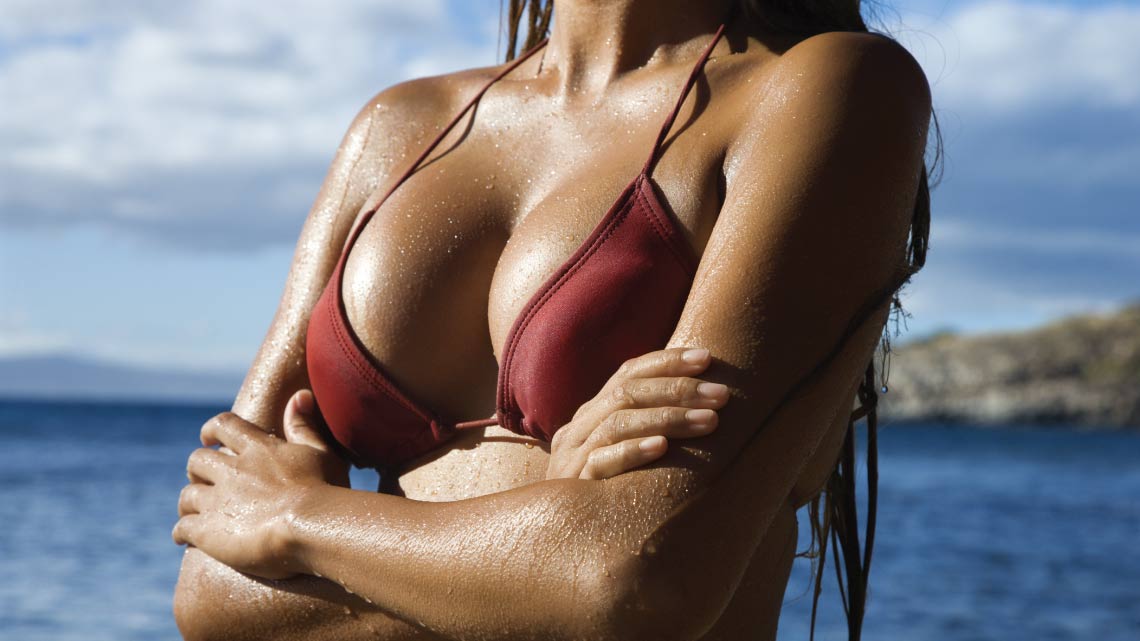
Enhance your shape and confidence with Breast Augmentation in Vancouver. Dr. Anzarut specializes in advanced augmentation mammoplasty using premium silicone and saline implants. Achieve natural, proportional results with personalized surgical planning. Serving Vancouver, Burnaby, Coquitlam, Richmond, Surrey, Victoria, and Nanaimo. Book your consultation today.

Breast Augmentation Procedure

Breast augmentation surgery is usually performed under general anesthetic so there won’t be any discomfort during the procedure.

During the operation, incisions will be made for the implants. Your surgeon will discuss the choices with you before the procedure.

Incisions are usually made under the breasts, or alternatively, around the areola, or in the armpit.

The implants are then inserted either behind the chest muscle or between the breast tissue and chest muscle. Your surgeon will offer advice about the position that is most suitable for you.

After the implants are in position, the incisions are stitched up with sutures and covered with a dressing.

In most cases, you should be able to go home the day of the operation. The surgery should take about an hour to 90 minutes.

Recovery After Breast Augmentation Surgery

After surgery, you breasts may be wrapped in dressings and a support bra will minimize swelling and help the healing process.

Soreness and swelling for the next few weeks is normal and will subside over time. Pain medication may be prescribed to help you manage the healing process.

You should be able to return to most of your normal activities gradually in the next four to six weeks, but avoid strenuous activities for the first 2 weeks.

Your breasts may be sensitive to sudden movements or contact during the healing process.

Regular annual examinations will be required to evaluate the condition of your implants.

Breast Augmentation Results

The results of breast augmentation are immediate. Swelling after surgery will subside over time and incisions lines will become less obvious.

While not designed to last forever, a healthy lifestyle will help ensure long term results.

It is important to follow your surgeon’s instructions for best results. Follow-up visits may be required to evaluate the healing process and diagnose any potential issues.

If you are concerned that your breasts look unnatural at first, this is temporary, and will usually settle and improve in a few months.

Breast Augmentation Risks and Complications

Along with the general risks of surgery, the risks of breast augmentation surgery may include scarring or creasing of the skin, and infection or bleeding after the procedure.

Implants may also, split, rupture, or lose their shape. Swelling or tenderness may be warning signs of a ruptured implant.

Complications with breast augmentation surgery are not common when performed by a qualified plastic surgeon.

Follow your surgeon’s instructions to reduce the risk of any complications. Contact your surgeon if you have any concerns regarding your implants.

Cost of Breast Augmentation Surgery in Vancouver, BC

The cost of breast augmentation surgery averages $8,000. You will also need to consider the cost of prescriptions for medication, consultations, and follow-up care after surgery.

Cosmetic surgery is normally not covered by health insurance. Financing plans may be offered by your plastic surgeon.

When choosing a plastic surgeon, it is important to understand that your relationship with him or her is as important as the cost of the procedure.

Why Choose Dr. Anzarut for Breast Augmentation?

Dr. Anzarut has extensive training in breast surgery. He is certified in plastic surgery by the Royal College of Physicians and Surgeons of Canada and the American Board of Plastic Surgery. He is a member in good standing with both the Canadian Society of Plastic Surgery and the American Society of Plastic Surgery.

After completing his plastic surgery training Dr. Anzarut completed a 6 month fellowship in complex breast surgery with world renowned surgeon Dr. Moustapha Hamdi in Brussels. Dr. Anzarut is able to provide 3-D simulations to help you see the potential results before surgery. He offers in office and remote consultations.

Introduction to Breast Surgery

Breast Augmentation Surgery Considerations & Expected Outcomes

Frequently Asked Questions (FAQ)

1. What is the average cost of Breast Augmentation in Vancouver?

In Vancouver, the total cost for Augmentation Mammoplasty typically ranges from $10,500 to $15,000 CAD. This comprehensive fee encompasses the surgeon’s specialist fee, FRCPC anesthesiologist costs, the NHMSFAP-accredited surgical facility fee, and the breast implants themselves (silicone or saline). Because surgical complexity varies (e.g., if a concurrent breast lift is needed), we provide a fully transparent, itemized quote during your initial consultation to ensure you can confidently plan your aesthetic investment without hidden surprises.

2. Is Augmentation Mammoplasty covered by MSP in BC?

No. Breast augmentation is classified as an elective cosmetic surgery and is never covered by the Medical Services Plan (MSP) of British Columbia. MSP only covers breast reconstructive surgery following a mastectomy for breast cancer or severe congenital defects. To help make your aesthetic goals a reality, our Lower Mainland clinic partners with trusted Canadian medical financing companies like Beautifi and Medicard to offer flexible, competitive monthly payment plans.

3. What types of breast implants are Health Canada approved?

In Canada, you have two primary Health Canada-approved options: Saline implants and Silicone cohesive gel implants (often called “gummy bear” implants). Silicone is the most popular choice among Vancouver patients because it closely mimics the natural feel and weight of human breast parenchyma (tissue) and carries a lower risk of visible rippling. Saline implants offer the benefit of a slightly smaller incision and harmless absorption by the body if a rare rupture occurs.

4. Should I choose submuscular or subglandular implant placement?

For the vast majority of our Vancouver patients, we recommend submuscular (dual-plane) placement, where the implant sits partially beneath the pectoralis major muscle. This provides maximum soft-tissue coverage, significantly reducing the risk of visible implant edges (rippling) and lowering the rate of capsular contracture. Subglandular placement (above the muscle) is generally reserved for patients with a substantial amount of natural breast tissue or competitive bodybuilders who wish to avoid muscle animation distortion.

5. Where will the incision scars be located?

The gold standard is the inframammary fold (IMF) incision, strategically placed in the natural crease beneath the breast. This 3-4 cm incision is completely hidden when standing naturally or wearing a bikini at Kitsilano Beach. Other options include the periareolar (around the nipple) or transaxillary (in the armpit) incisions. During your consultation, we carefully evaluate your anatomy to determine which approach offers the safest insertion with the most inconspicuous scarring.

6. What is Capsular Contracture and how is it prevented?

Capsular contracture is a complication where the body’s natural internal scar tissue (capsule) tightly squeezes the implant, causing the breast to feel abnormally firm or appear distorted. To drastically minimize this risk, we utilize a rigorous protocol: submuscular placement, prophylactic antibiotics, and the “no-touch” Keller Funnel technique. This sterile sleeve prevents the implant from touching the skin’s surface bacteria during insertion, maintaining the highest standard of surgical safety.

7. What is Breast Implant Illness (BII) and BIA-ALCL?

Breast Implant Illness (BII) is a term patients use to describe a cluster of systemic symptoms (like brain fog or joint pain). While not yet a recognized medical diagnosis, we validate and take all patient symptoms seriously. BIA-ALCL is a rare, highly treatable lymphoma associated almost exclusively with heavily textured implants. To prioritize your safety, our Vancouver clinic strictly uses smooth, Health Canada-approved implants, which carry an exceptionally low risk profile.

8. Can I achieve a larger cup size using my own fat instead of implants?

Yes, this is called Autologous Fat Transfer to the breasts. We use liposuction to harvest fat from your abdomen or thighs, purify it, and inject it into the breasts. While this provides a completely natural feel without synthetic devices, it is only suitable for patients seeking a modest increase of 0.5 to 1 cup size. For Vancouver patients desiring a dramatic increase in upper pole projection and volume, traditional implants are required.

9. Will breast implants affect my ability to breastfeed?

Most women can successfully breastfeed after augmentation mammoplasty. By utilizing the inframammary fold incision and placing the implant beneath the muscle (submuscular), we completely avoid cutting through the glandular tissue (parenchyma), milk ducts, and the primary nerves supplying the nipple. If preserving lactation is a priority for your future family planning, we will explicitly tailor your surgical approach to protect your functional anatomy.

10. Can I still get mammograms with breast implants?

Absolutely. You can and should continue routine breast cancer screenings as recommended by BC Cancer. You must simply inform the X-ray technician that you have implants. They will perform Eklund displacement views, a specialized technique that gently pushes the implant backward against the chest wall while pulling the breast tissue forward, ensuring a clear, accurate image. Submuscular implant placement makes this imaging process significantly easier and more accurate.

11. How long do breast implants last? Do they expire?

Breast implants are incredibly durable, but they are not lifetime devices. While they do not technically “expire,” the average lifespan of a modern cohesive gel implant is 10 to 15 years. Over time, the silicone shell experiences wear and tear, eventually leading to a rupture. We recommend that our Vancouver patients undergo periodic ultrasound or MRI screenings after the 5 to 7-year mark to silently monitor the structural integrity of the implant.

12. How do I choose between a Moderate and High Profile implant?

Implant profile determines how far the breast projects forward relative to its base width. A high profile implant has a narrower base and pushes further out, ideal for petite Vancouver women with narrow chest walls who want maximum cleavage. A moderate profile has a wider base, providing a subtler, more natural slope. We precisely measure your base width diameter (BWD) to recommend the profile that biologically fits your frame.

13. What is the recovery time for Breast Augmentation?

Most Vancouver patients plan for 5 to 7 days away from desk work. The first 48 hours involve a sensation of deep muscle tightness (if placed submuscularly), easily managed with prescribed analgesics. While you can go for light walks immediately, you must strictly avoid heavy lifting (over 10 lbs) and strenuous cardiovascular activity for 4 to 6 weeks. It takes 3 to 6 months for the implants to fully “fluff and drop” into their final position.

14. When can I return to the gym or run the Seawall?

Light, flat-terrain walking on the Vancouver Seawall is encouraged within the first week to promote blood flow and prevent blood clots (DVT). However, running, spin classes, and lower-body weightlifting must be paused for 4 weeks to prevent hematomas. Any targeted upper-body exercises engaging the pectoralis major muscles (like push-ups, planks, or chest presses) are strictly prohibited for 6 to 8 weeks to ensure your internal fascial pocket heals securely.

15. What type of anesthesia is used for this surgery?

To ensure your absolute comfort and airway safety, Augmentation Mammoplasty is performed under General Anesthesia. You will be completely asleep and pain-free. In our accredited Vancouver facility, sedation is administered exclusively by a specialist Fellow of the Royal College of Physicians and Surgeons of Canada (FRCPC) anesthesiologist, who meticulously monitors your vitals, fluid balance, and core temperature throughout the 1 to 1.5-hour procedure.

16. Where is the surgery performed in Vancouver?

Your safety is our non-negotiable priority. All breast surgeries are executed in a state-of-the-art private surgical centre fully accredited by the Non-Hospital Medical and Surgical Facilities Accreditation Program (NHMSFAP) of BC. This rigorous certification guarantees our operating rooms are equipped with hospital-grade sterilization technology, emergency crash carts, and advanced patient monitoring systems, meeting the absolute highest medical safety standards in the province.

17. Why must I stop smoking before getting breast implants?

Nicotine is a potent vasoconstrictor that starves healing tissues of crucial oxygen and blood flow. Continuing to smoke, vape, or use nicotine patches drastically increases your risk of catastrophic complications, including delayed wound healing, severe infections, and capsular contracture. To guarantee a safe surgical outcome, you must be completely nicotine-free for a strict minimum of 4 to 6 weeks before and after your augmentation in Vancouver.

18. What happens if my breasts are asymmetrical before surgery?

Virtually all women have some degree of breast asymmetry regarding size, shape, or nipple position. During your consultation, we carefully measure these discrepancies. To create a more balanced, proportionate chest, we can use different sized implants (e.g., a 300cc implant on the left and a 350cc implant on the right). While perfect mathematical symmetry is impossible, augmentation mammoplasty is highly effective at harmonizing your natural silhouette.

19. Are there BMI restrictions for Breast Augmentation surgery?

Yes, for your safety under general anesthesia, most accredited private surgical facilities in BC enforce a Body Mass Index (BMI) limit, typically under 30 or 32. Elevated BMI significantly increases the risk of anesthetic complications, wound dehiscence, and post-operative infections. Furthermore, you should be at a stable weight; significant future weight loss can cause the breast tissue to deflate, potentially revealing the edges of your implants.

20. How do I choose the best Breast Augmentation surgeon in Vancouver?

Do not compromise on your medical safety. Ensure your surgeon is a Fellow of the Royal College of Physicians and Surgeons of Canada (FRCSC) specifically trained in Plastic Surgery. You can verify their credentials via the College of Physicians and Surgeons of BC. Review their before-and-after galleries for consistency, looking for natural cleavage, well-hidden scars in the inframammary fold, and an aesthetic style that aligns with your personal goals.

Book a Consultation Today

Service Area Locations

Dr Anzarut Plastic Surgery in Vancouver serves Kitsilano, Burnaby, Coquitlam, New Westminster, Richmond, Surrey, Delta, North Vancouver, West Vancouver, Langley, and White Rock in Metro Vancouver (Lower Mainland), British Columbia.

Dr Anzarut Plastic Surgery in Duncan serves Victoria, Nanaimo, Courtenay, Campbell River, Parksville, Port Alberni, Ladysmith, Cowichan Valley, and Comox Valley on Vancouver Island.

Things to Consider When Choosing Breast Augmentation in Vancouver

Enhancing your breast volume and proportion is one of the most transformative procedures in plastic surgery. However, achieving a natural, proportionate result that lasts requires meticulous planning. This comprehensive checklist covers every clinical, financial, and logistical detail you must know before booking an augmentation mammoplasty (Breast Augmentation) in Vancouver, British Columbia.

I. Surgeon & Facility Vetting (The “Who” and “Where”)

  1. FRCSC Certification: Verify your surgeon is a Fellow of the Royal College of Physicians and Surgeons of Canada in Plastic Surgery.
  2. Cosmetic vs. Plastic: In BC, any physician can legally market themselves as a “cosmetic surgeon.” Only an FRCSC has completed a specialized 5+ year surgical residency.
  3. NHMSFAP Accreditation: Your surgery must occur in a private facility fully accredited by the Non-Hospital Medical and Surgical Facilities Accreditation Program (NHMSFAP) of BC.
  4. CPSBC Standing: Search the College of Physicians and Surgeons of BC directory to confirm your surgeon has a clean disciplinary record.
  5. Hospital Privileges: A top-tier Vancouver surgeon will hold admitting privileges at major local hospitals like Vancouver General Hospital (VGH) or St. Paul’s.
  6. Anesthesia Provider: Confirm your general anesthesia will be administered by a Board-Certified Anesthesiologist (FRCPC), ensuring maximum airway safety.
  7. Consultation Tools: Look for surgeons utilizing Vectra 3D Imaging or physical sizers paired with a white tank top to help you visualize your target volume.
  8. Before & After Consistency: Scrutinize the surgeon’s gallery for patients with your starting body type. Look for natural cleavage and smooth, un-rippled contours.
  9. Malpractice Insurance: Verify the surgeon carries robust coverage through the Canadian Medical Protective Association (CMPA).
  10. Revision Policy: Understand the clinic’s protocol and fees if an implant exchange, capsulotomy, or scar revision is needed in the future.

II. Financials & BC Medical Services Plan (MSP)

  1. Cost Range in Vancouver: A primary breast augmentation typically ranges from $10,500 to $15,000 CAD, depending on the implant type and surgical complexity.
  2. MSP Non-Coverage: Cosmetic augmentation is strictly elective and never covered by the Medical Services Plan (MSP) of BC.
  3. 5% GST: Elective cosmetic surgery is subject to the 5% Goods and Services Tax (GST) in Canada.
  4. Medical Financing: Most Lower Mainland clinics partner with Beautifi or Medicard to offer flexible monthly payment plans.
  5. Quote Transparency: Ensure your quote explicitly includes the surgeon’s fee, OR facility time, anesthesia, the implants, and your post-op surgical bra.
  6. Consultation Fees: Initial consults in Vancouver typically cost $150-$300, which is usually applied toward your surgical total.
  7. Non-Refundable Deposits: Securing OR time usually requires a deposit ranging from $1,000 to $2,500.
  8. Tax Deductibility: Cosmetic mammoplasty is generally not a tax-deductible medical expense under CRA guidelines.
  9. Prescription Budget: Set aside $100-$150 for painkillers, muscle relaxants, and anti-nausea meds at your local pharmacy.
  10. Time Off Work: Budget 5 to 7 days for desk jobs, and 3 to 4 weeks for jobs requiring heavy lifting or physical exertion.

III. Implant Types, Profiles & Technologies

  1. Health Canada Approval: Ensure your surgeon strictly uses implants approved by Health Canada (e.g., Allergan, Mentor, Sientra).
  2. Silicone Cohesive Gel: Often called “gummy bear” implants, these are the most popular choice in Vancouver as they closely mimic natural breast parenchyma (tissue).
  3. Saline Implants: Filled with sterile saltwater post-insertion. They require a smaller incision and are harmlessly absorbed by the body if ruptured.
  4. Autologous Fat Transfer: Using liposuction to harvest your own fat and inject it into the breasts. Ideal for a subtle, natural 0.5 to 1 cup size increase without synthetic devices.
  5. Base Width Diameter (BWD): Your chest anatomy dictates the maximum size implant you can safely accommodate without edges showing.
  6. Implant Profile: Dictates forward projection. A High Profile is narrower but projects further (more cleavage); a Moderate Profile is wider with a subtler slope.
  7. Smooth vs. Textured: Vancouver surgeons now almost exclusively use smooth implants to drastically reduce the risk of BIA-ALCL.
  8. CCs (Cubic Centimeters): Implants are measured in volume (cc), not cup size. A 350cc implant looks entirely different on a petite frame versus a broad chest.
  9. The Keller Funnel: A sterile, “no-touch” pastry-bag-like device used to squeeze the implant into the pocket, minimizing skin contact and reducing infection/contracture risks.
  10. Manufacturer Warranties: Understand the warranty provided by the implant manufacturer covering rupture and severe capsular contracture.

IV. Surgical Placement & Incisions

  1. Submuscular (Dual-Plane) Placement: The gold standard. The implant is placed partially under the pectoralis major muscle, hiding the upper edge for a natural slope.
  2. Subglandular Placement: Placed over the muscle but under the breast gland. Reserved for athletes or women with extensive natural breast tissue to cover the implant.
  3. Inframammary Fold (IMF) Incision: A 3-4 cm incision hidden perfectly in the natural breast crease. It offers the surgeon maximum visibility and control.
  4. Periareolar Incision: Placed around the lower half of the areola. Useful if the surgeon is concurrently reducing the areola size.
  5. Transaxillary Incision: Placed in the armpit. Leaves zero scarring on the breast itself, but restricts the surgeon’s ability to lower the breast fold accurately.
  6. Tissue Coverage (“Rippling”): If you are very thin, submuscular placement is mandatory to prevent seeing or feeling the ripples of the implant shell.
  7. Animation Deformity: With submuscular placement, flexing your chest muscles (e.g., doing a push-up) will cause the implants to temporarily shift outward.
  8. Suture Types: Expert surgeons use deep, dissolving internal sutures to close the incision in layers, minimizing tension on the skin.
  9. Surgical Mesh (GalaFLEX): Occasionally used internally as a supportive “bra” for patients with very weak, over-stretched tissue.
  10. Capsular Contracture Prevention: Submuscular placement, smooth implants, Keller Funnel insertion, and antibiotic irrigation all mathematically lower contracture risks.

V. Anatomy & Candidacy

  1. BMI Restrictions: For safety under general anesthesia, most accredited private facilities in BC strictly cap Body Mass Index (BMI) at 30 or 32.
  2. Breast Asymmetry: Virtually all women have asymmetrical breasts. Surgeons correct this by using two different implant volumes (e.g., 300cc left / 350cc right).
  3. Ptosis (Sagging): Implants increase volume; they do not lift sagging breasts. If your nipples sit below your breast crease, you require a concurrent Mastopexy (Breast Lift).
  4. Chest Wall Deformities: Conditions like Pectus Excavatum (sunken chest) or a curved ribcage will alter how the implants sit and point.
  5. Nipple Position: Implants push existing anatomy outward. If your nipples point slightly outward (“east-west”), implants will amplify this.
  6. Future Pregnancies: It is highly recommended to wait until you are finished having children, as pregnancy and engorgement can stretch the skin over the implants.
  7. Breastfeeding Implications: The IMF incision combined with submuscular placement avoids cutting milk ducts, preserving your ability to breastfeed safely.
  8. Mammography: Implants do not prevent breast cancer screening. You must visit a BC Cancer clinic where technicians will use Eklund displacement views.
  9. Stable Weight: Significant weight loss post-surgery will thin your natural fat pad, potentially making the implant edges visible.
  10. Realistic Expectations: Surgery creates a larger, more balanced version of your natural breasts, not mathematically perfect spheres.

VI. Pre-Operative Preparation

  1. Nicotine Ban: You must stop smoking, vaping, or using nicotine patches for 4-6 weeks pre-op to prevent tissue necrosis and severe wound healing issues.
  2. Blood Thinners: Discontinue Aspirin, Advil, Vitamin E, Fish Oil, and Ginseng two weeks prior to minimize surgical bleeding and hematoma risk.
  3. LifeLabs Bloodwork: You will need pre-op blood tests (CBC, clotting factors) at a local LifeLabs two weeks prior.
  4. ECG Clearance: Patients over 50 generally require an electrocardiogram to ensure cardiac safety under anesthesia.
  5. Wardrobe Prep: Buy button-down or zip-up shirts. You will not be able to raise your arms to pull a tight sweater over your head.
  6. Home Setup: Purchase a wedge pillow system. You must sleep elevated at a 45-degree angle to minimize severe chest swelling.
  7. Post-Op Escort: You cannot take an Uber or BC Transit alone after sedation. A responsible adult must drive you home.
  8. Childcare: You cannot lift anything heavier than 10 lbs (including toddlers) for 4 weeks.
  9. Meal Prep: Cook and freeze soft, low-sodium meals. Salt drastically exacerbates post-operative edema.
  10. Hygiene: You will be asked to wash your chest with an antibacterial soap (like Hibiclens) the morning of surgery to prevent staph infections.

VII. The Surgical Experience

  1. Anesthesia Type: Mammoplasty is performed under General Anesthesia to ensure total comfort, muscle relaxation, and airway protection.
  2. Duration: The surgery is highly efficient, typically taking 1 to 1.5 hours.
  3. DVT Prevention: Sequential Compression Devices (SCD boots) will massage your lower legs in the OR to prevent blood clots (Deep Vein Thrombosis).
  4. Hypothermia Prevention: Bair Hugger warming blankets maintain your core temperature, reducing cardiac stress in the OR.
  5. Tumescent Fluid: A mixture of saline and epinephrine is injected into the breast pocket to drastically minimize bleeding.
  6. Exparel / Pain Pumps: Ask if your surgeon injects long-acting local anesthetics directly into the pectoral muscle to block spasms and pain for the first 72 hours.
  7. PONV Protocols: Anti-nausea medications (like Zofran) are given preemptively.
  8. Surgical Bra: You will wake up already strapped into a specialized compression bra (e.g., Surgical Couture) or wrapped in an ACE bandage.
  9. Recovery Room: You will be monitored for 1-2 hours by specialized perioperative nurses until grogginess subsides.
  10. Discharge: Breast augmentation is an outpatient day surgery; you will go home the same afternoon.

VIII. Immediate Recovery Timeline

  1. Muscle Spasms: If placed submuscularly, your chest will feel incredibly tight, like a severe charley horse. Prescribed muscle relaxants are critical here.
  2. Strict Supine Sleeping: You must sleep strictly on your back. Rolling onto your stomach or side will shift the implants while the pocket is healing.
  3. Swelling Peak: Chest swelling peaks at Days 3 to 4. Your breasts will look unnaturally high and boxy—this is completely normal.
  4. Compression 24/7: You must wear the surgical bra day and night for 4-6 weeks to support the healing tissues and guide the implants downward.
  5. Constipation: Opioids and anesthesia cause constipation. Start taking RestoraLAX immediately post-op to avoid straining.
  6. Showering: You can usually shower after 48 hours. Let soapy water run over the taped incisions, but do not scrub them.
  7. Driving Ban: No driving while on narcotics or while your arm mobility (steering) is restricted by chest tightness (usually 1-2 weeks).
  8. Walking: You must take short, slow walks around the house immediately on Day 1 to prevent DVT blood clots.
  9. Emotional Dip: A “post-op blues” phase around Day 4 is very common due to swelling, cabin fever, and anesthesia withdrawal.
  10. Arm Limitations: Keep your elbows below your shoulders. Reaching high into cabinets flexes the pectoral muscle and strains the incision.

IX. Long-Term Healing & Results

  1. The “Fluff and Drop”: Implants sit unnaturally high initially. It takes 3 to 6 months for the pectoral muscle to relax and the implants to drop into the lower pole.
  2. Scar Maturation: IMF scars are red and raised initially. It takes 12 to 18 months for them to fade into flat, pale lines hidden in the breast crease.
  3. Silicone Scar Therapy: Once incisions are fully closed, apply medical-grade silicone gel daily to optimize scar fading.
  4. Numbness & “Zingers”: The lower breast and nipples will be numb for months, eventually replaced by itchy, “zinging” electrical feelings as nerves reconnect.
  5. Exercise Return: Light walking on the Vancouver Seawall is encouraged. Heavy lower-body lifting is banned for 4 weeks; upper-body chest workouts are banned for 6-8 weeks.
  6. UV Protection: Vancouver sun can permanently darken fresh scars (hyperpigmentation). Keep incisions covered or use SPF 50.
  7. Underwire Bra Ban: Do not wear underwire bras for at least 6-8 weeks, as the rigid wire can rub directly against the healing IMF incision.
  8. Implant Lifespan: Implants are not lifetime devices. Expect to replace or remove them after 10 to 15 years due to natural wear and tear.
  9. Silent Ruptures: Silicone ruptures do not deflate like saline. You should get an MRI or ultrasound screening 5 to 7 years post-op to check shell integrity.
  10. Wardrobe Patience: Don’t buy expensive new lingerie until the 3-to-6-month mark when deep swelling is completely gone.

X. Risks & Local Logistics

  1. BIA-ALCL Risk: An extremely rare lymphoma linked to heavily textured implants. Vancouver surgeons use smooth implants to mitigate this risk.
  2. Capsular Contracture: The body’s natural scar tissue squeezing the implant, making it hard or painful. May require revision surgery.
  3. Hematoma: A rapid pooling of blood in the breast pocket (usually within 24 hours) requiring immediate surgical drainage.
  4. Seroma: A localized pocket of fluid around the implant.
  5. Infection: Rare, but requires immediate oral or IV antibiotics, and in severe cases, temporary implant removal.
  6. Traffic Logistics: Avoid the Lions Gate or Ironworkers bridges during rush hour on your painful drive home from the Vancouver surgical center.
  7. Rain Gear: Buy a zip-up raincoat. You cannot struggle into a tight pullover shell jacket with fresh chest incisions.
  8. Flying Restrictions (YVR): You cannot fly for at least 1-2 weeks post-op due to the severe DVT risk and pressure changes at cabin altitude.
  9. Avoid Medical Tourism: Traveling abroad for cheap implants leaves you stranded if a hematoma, infection, or contracture occurs back in BC.
  10. The Psychological Payoff: The recovery requires patience, but the ultimate reward is profound confidence, vastly improved clothing fit, and a beautifully balanced silhouette.